The best time to lay sod in Ontario is either mid-April through early June, or late August through September. Both windows work well, but they behave very differently, and choosing the wrong one can mean weeks of extra watering or a lawn that fails to root before the first frost. If you're planning a professional sod installation this season, understanding the difference between spring and fall timing will save you money and frustration.
The single factor that matters most is soil temperature, not air temperature. Your grass can look lush and green while the ground beneath is still too cold for roots to grow. Get this right, and your sod knits in within two weeks. Get it wrong, and you're calling a landscaper back in June.
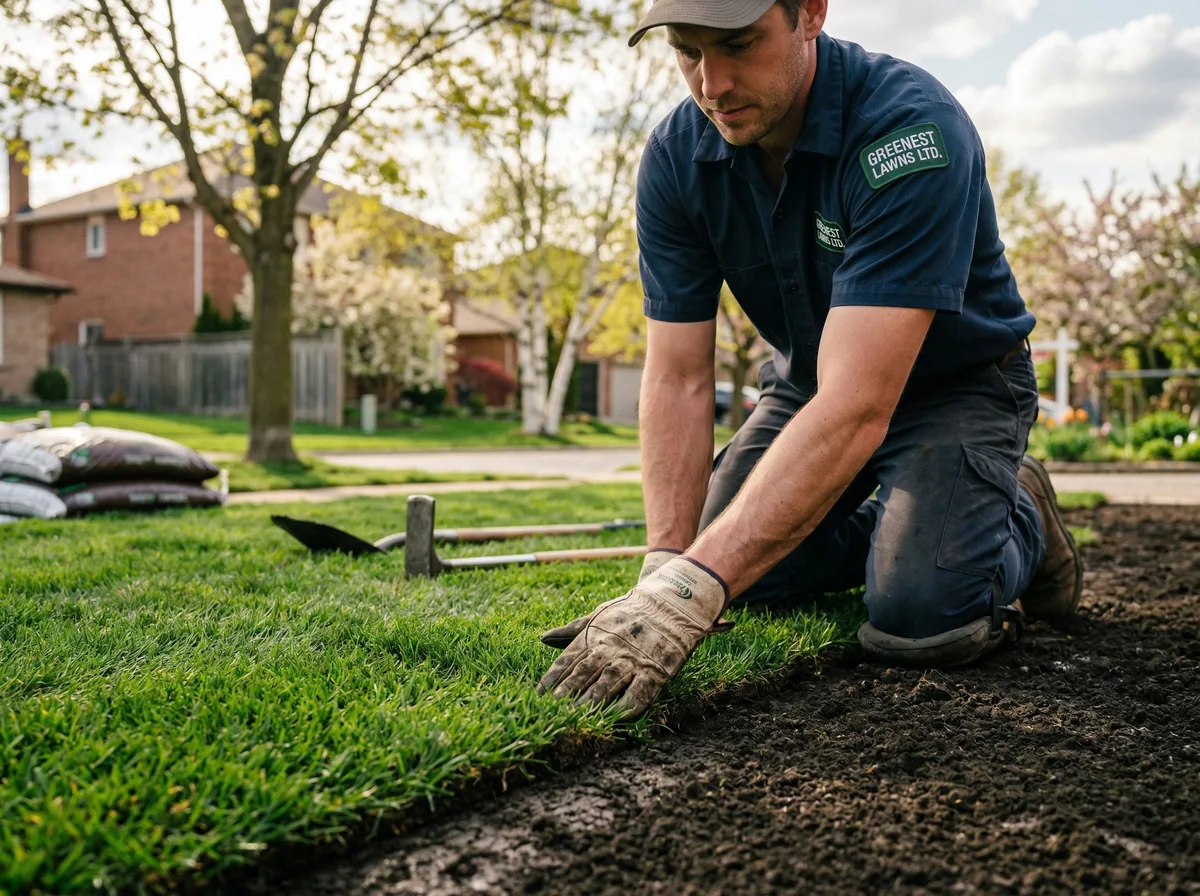
The two reliable windows for Ontario sod
Ontario's climate creates two distinct sweet spots for sod installation, and they're driven by the same logic: soil that's warm enough for root growth but air temperatures that won't cook the grass before it knits in.
Most GTA landscapers work flat-out from mid-April to early June, then again from late August through September. The gap in the middle, July and most of August, exists for a reason. Sod installed during peak summer heat requires constant water to survive and still carries real failure risk in exposed, south-facing yards.
People often ask: what is the best time of year to sod a lawn in Ontario?
The best time to lay sod in Ontario is late August through September if you want the easiest, lowest-maintenance establishment. Spring, specifically mid-April to late May, is a close second. Both work. Fall just requires less intervention because rainfall is more reliable and temperatures are cooling, not climbing.
Spring sod installation in Ontario: April to early June
Spring is when most GTA homeowners want their lawn done. The yard looks terrible after winter, the neighbours are cleaning up their gardens, and you want green grass by May. That instinct is right, but timing within spring matters a lot.
What soil temperature actually tells you
Sod roots grow when soil temperatures are above 10 degrees Celsius. Below that threshold, root development essentially stalls. The grass may look fine from the surface, but you're essentially setting it on cold concrete, hoping for the best.
In the GTA, soil typically crosses the 10-degree threshold around mid-April in most years, sometimes later if March was cold and wet. You can check soil temperature with an inexpensive probe thermometer from any garden centre. Insert it 5 to 7 cm down, in the morning, in a shaded area for the most accurate reading.
Did you know?
Soil temperature lags behind air temperature by 2 to 4 weeks in spring. Even if your daytime high is 18 degrees in mid-April, the ground 5 cm down may still be reading 7 or 8 degrees. That's why waiting until late April or early May in the GTA produces better results than rushing in early April, even in a warm year.
The GTA spring window in practice
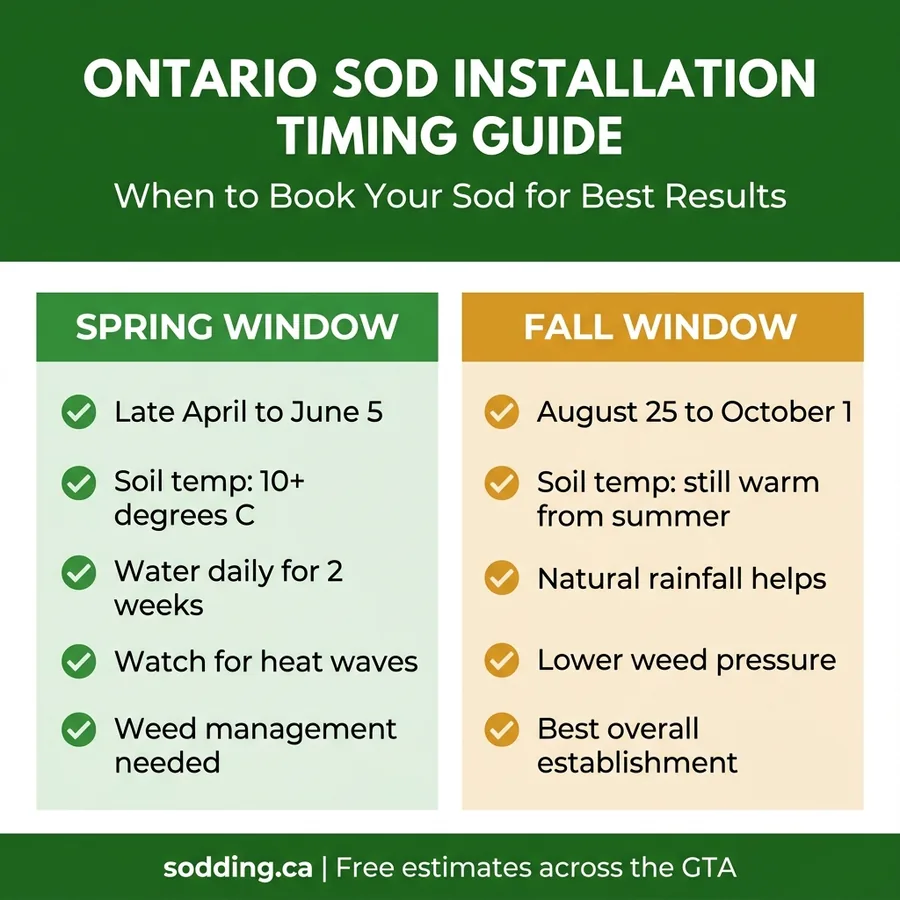
For most of the GTA, including Vaughan, Richmond Hill, and North York, the reliable spring window runs from April 25 to June 5. Before April 25, soil temperatures are marginal in most years. After June 5, you're pushing into territory where heat and dry spells can stress new sod before it roots.
The ideal scenario: sod goes down in late April or early May, gets two weeks of consistent moisture from spring rainfall, and is mostly established by the time your first real heat wave arrives in June.
Spring trade-offs to know before you book
Spring sodding has one significant downside: weed pressure. Crabgrass, dandelions, and broadleaf weeds all germinate in the same temperature window as your sod roots. You'll have more weed management to do in a spring-installed lawn than a fall-installed one. Not a dealbreaker, but budget for it.
Spring also brings more inconsistent moisture. A dry May can put real stress on sod that's only two weeks old. If you're not prepared to water daily during a dry spell, fall installation is the more forgiving choice.
Fall sod installation in Ontario: late August to September
Ask any experienced sodding contractor in Ontario and most will tell you fall is actually the better season for sod installation. The soil is still warm from summer, air temperatures are cooling, rainfall is more reliable, and weeds are winding down instead of gearing up.
Why fall often beats spring
Fall-installed sod has a full growing season ahead of it once spring arrives. By April of the following year, fall sod is already well-rooted and ready to push top growth. Spring-installed sod, by comparison, is still in its establishment phase when the summer heat hits.
The other advantage is water. Late August and September in Ontario typically bring more consistent rainfall than May and June. You still need to water new sod daily for the first two weeks, but you're less likely to be fighting a heat wave at the same time.
Pro tip
If you're installing sod in late August, put it down on a day when the forecast shows at least 5 to 7 days of moderate temperatures. Sod installed during a late-summer heat wave (35-plus degrees) needs water twice a day to survive. Mid-September is the sweet spot: soil stays warm for rooting, but you rarely see temperatures above 25.
The cutoff date that matters for fall sod
In the GTA, October 1 is the practical cutoff for fall sod installation in most years. You want 3 to 4 weeks of soil temperatures above 10 degrees after installation. GTA soil typically drops below that threshold in the first two weeks of October.
Areas north of the GTA, including Barrie, Newmarket, and Bradford, lose their window about two weeks earlier. If you're in those areas, September 15 is a safer cutoff date.
"We put sod down in mid-September last year and it looked incredible by spring. Way better than the spring sod we did on the other side of the yard two years ago. Fall just seems less stressful for the grass."
r/lawncare homeowner, 2024
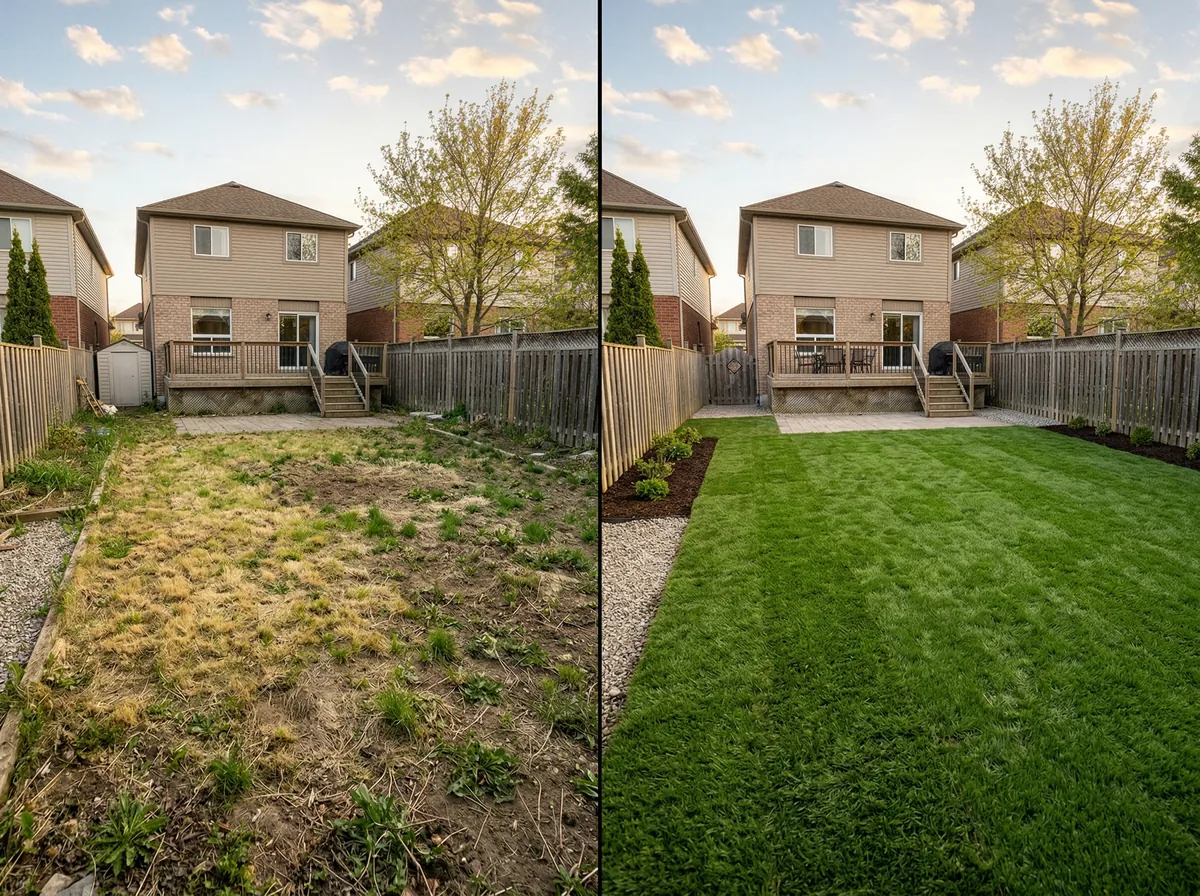
Spring vs fall: side-by-side comparison
Here's how the two windows stack up across the factors that matter most to Ontario homeowners:
| Factor | Spring (April to June) | Fall (August to September) |
|---|---|---|
| Soil temperature | Warming up, hit 10°C by late April | Already warm from summer, still 15-20°C |
| Watering demands | High, especially if June heat arrives early | Lower, rainfall more consistent |
| Weed pressure | High, crabgrass and broadleaf weeds germinate alongside sod | Low, weeds winding down for the season |
| Rooting speed | 10 to 14 days in ideal conditions | 10 to 21 days, slower as season progresses |
| Risk of failure | Moderate if dry spell hits during rooting | Low in August/September, higher past October 1 |
| Availability | Busiest season, book 2 to 4 weeks in advance | Slightly easier to book, less competition |
| Best for | Homeowners who want green grass by summer | Homeowners who want easiest establishment |
The bottom line: if you want the path of least resistance, do it in fall. If your priority is enjoying a green lawn through the summer, spring is your window. Both work. The difference is how much attention the new lawn needs during establishment.
How to tell if your soil is ready for sod
Note: The steps below are general guidelines for assessment only. For accurate results, use a calibrated soil thermometer. Sodding Canada checks soil conditions before every installation. Book a free assessment and we'll tell you exactly when your yard is ready.
- Check soil temperature at 5 cm depth. Insert a soil thermometer 5 cm into the ground in a shaded area in the morning. You're looking for a reading above 10 degrees Celsius. Below that, hold off.
- Check the 14-day forecast. Avoid installing sod if a heat wave (35-plus degrees) or heavy frost is forecast within the next two weeks. Both create establishment stress before roots can develop.
- Assess soil moisture. The soil should be moist but not waterlogged. Dig down 10 cm. If water pools in the hole, wait. If the soil crumbles to dust, water it thoroughly 24 hours before installation.
- Check that soil prep is complete. Sod goes down on graded, fertilized, raked soil with at least 10 cm of quality topsoil. If this isn't done, roots have nowhere to go.
- Confirm no frost in the 5-day forecast. In spring, watch for late-season frost warnings. Sod can survive a light frost after it's rooted, but brand-new sod in the first week is vulnerable.
What about summer sod installation?
You can install sod in July and August, but you're working against the weather instead of with it. Extended heat stress before rooting is the main risk. Sod farms harvest and transport their product early in the morning. By the time it gets to your yard, it has been in a roll for hours in summer heat.
People often ask: can you lay sod in July in Ontario?
Yes, but you need to commit to watering twice daily for the first two weeks and install on a cooler day if possible. Most professional landscapers in Ontario prefer not to install sod in July if there's any flexibility. The risk of failure is higher, and sod prices are the same regardless of season. If your project allows it, waiting until late August saves a lot of stress.
Homeowners who insist on summer installation should use Landscape Ontario member companies with experience in summer sod, since proper staging and rapid installation significantly improve success rates. The difference between sod sitting in a pallet for 6 hours in the sun and sod that goes down within 2 hours of delivery is substantial.
Sod timing readiness tool
Use this tool to check whether your timing makes sense for Ontario conditions:
Ontario sod timing check
Download the free quick guide
Save this guide as a PDF and keep it handy for your next lawn project.
Best Time to Lay Sod in Ontario: Spring vs Fall Timing Guide — Free PDF GuideSodding Canada installs sod across Toronto and the GTA throughout the spring and fall seasons. If you're trying to figure out whether your yard is ready or want a professional opinion on timing, book a free assessment and we'll take a look.
Frequently asked questions
Can you lay sod in Ontario in October?
You can, but it is risky. Sod installed after October 1 in most GTA areas may not have enough time to root before the ground freezes. If soil temperatures drop below 5 degrees Celsius before the sod knits in, you risk losing the entire installation. Stick to September as your latest safe date, or hold off until the following spring.
What is the minimum soil temperature for sod installation in Ontario?
The minimum soil temperature for sod to root properly is around 8 to 10 degrees Celsius. Below that, root growth slows to almost nothing and the sod just sits without establishing. In the GTA, soil reaches this threshold around mid-April in spring and stays warm enough until mid-to-late October in fall.
How long does it take for new sod to root in Ontario?
In ideal conditions, new sod begins to knit roots within 10 to 14 days. Full rooting, where the lawn can handle regular foot traffic and mowing, typically takes 4 to 6 weeks. Fall-installed sod may take longer to fully establish because growth slows as temperatures drop, but the roots are well set by the following spring.
Should I water sod differently in spring vs fall?
Yes. Spring-installed sod often needs more intensive watering because the hot, dry weather of late May and June arrives quickly after installation. Fall sod benefits from natural rainfall and cooler temperatures, which reduces how often you need to water. Both require daily watering for the first two weeks, but fall sod is more forgiving if you miss a day.
Does it matter what time of day you install sod in Ontario?
Early morning or late afternoon is best. Avoid installing sod at midday in direct sun, especially in June or August, because the grass can dry out quickly before the roots make contact with the soil. A cool, overcast day is ideal for any sod installation.
Ready to get your lawn done right? Sodding Canada serves Vaughan, Richmond Hill, Markham, and communities across the GTA. Book your free sod installation estimate and we\u2019ll assess your yard and give you a clear timeline.

Written by
Ryan M.
Senior Sod Installer | Lawn Care Specialist
Ryan Mitchell has been installing sod across the GTA and York Region for over 12 years. He specializes in residential and commercial lawn establishment, soil grading, and selecting the right turf variety for each microclimate. Ryan has completed thousands of sod installations from Barrie to Oakville and knows firsthand how Ontario freeze-thaw cycles affect new lawns.