
Last updated:
Listen to this article as a podcast
Listen to this article about kentucky bluegrass for ontario lawns: what you need to know as a podcast.
Kentucky bluegrass is the most popular sod variety in Ontario, and for good reason. When conditions suit it, a well-established KBG lawn is dense, dark green, and recovers well from the kind of abuse a busy family yard gets. But it has real limitations that not every yard can accommodate. If you're looking at professional sod installation and wondering whether Kentucky bluegrass is the right call for your Ontario property, here's what you actually need to know before booking.
The short version: Kentucky bluegrass Ontario lawns do very well in full sun with consistent moisture and proper fall feeding. They struggle in heavy shade and can go dormant in dry summers if you don't water. Neither of those things is a dealbreaker, but both are worth understanding before you commit.
What Kentucky bluegrass actually is
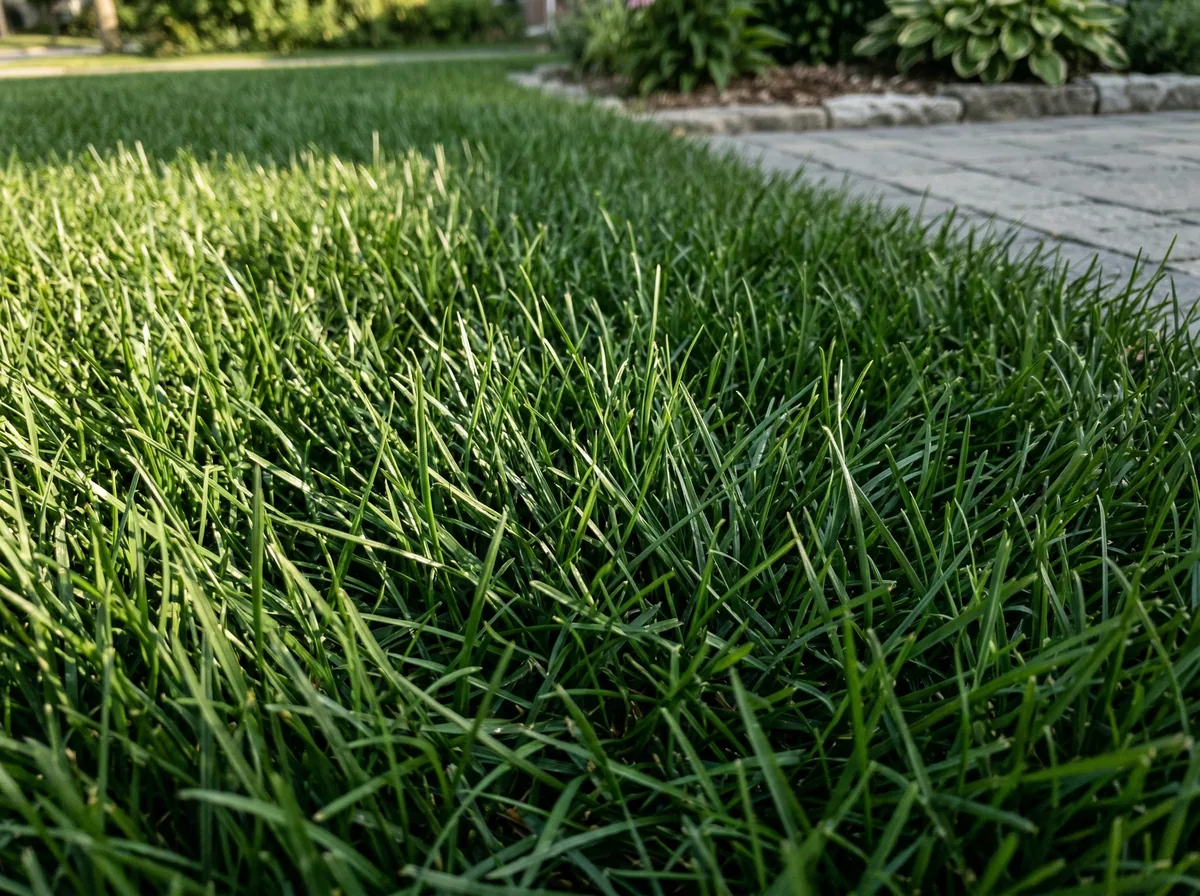
Despite the name, Kentucky bluegrass (Poa pratensis) is not from Kentucky. It's a cool-season grass native to Europe and northern Asia that was introduced to North America centuries ago and thrives in the northern United States and Canada. It's called "blue" because of a slight blue-green tint in its colour, most visible in cool, moist weather.
Kentucky bluegrass spreads by underground stems called rhizomes, which means it self-repairs. If a section of lawn gets damaged, healthy KBG turf slowly fills in the bare area over time, which is one reason it's so popular for residential properties in the GTA. A tall fescue or ryegrass lawn doesn't self-repair in the same way.
Did you know?
Most Ontario sod farms grow a blend of 3 to 5 Kentucky bluegrass cultivars together, rather than a single variety. This blending improves disease resistance, shade tolerance, and overall hardiness. When you see "Kentucky bluegrass sod" at a supplier, you're typically getting a curated blend developed for Ontario conditions, not a single cultivar.
How Kentucky bluegrass performs in Ontario conditions
Ontario has a continental climate with cold winters, warm humid summers, and highly variable spring and fall conditions. Kentucky bluegrass handles this better than most people expect.
Winter hardiness
Kentucky bluegrass is genuinely winter-hardy in Ontario. It goes dormant in winter under snow cover and returns aggressively in spring. The risk isn't cold, it's freeze-thaw cycles in March and early April that heave the soil and disrupt shallow root systems. A well-established KBG lawn handles this fine. A newly installed lawn from the previous fall, still rooting in, can suffer heave damage in a bad March. That's worth knowing if you're planning a late-season installation in Richmond Hill or other northern GTA communities.
Summer performance in the GTA
This is where Kentucky bluegrass shows its one real limitation for Ontario lawns. During extended hot, dry periods in July and August, KBG will go semi-dormant and turn brown. It won't die, it's just conserving water. A good rain or a week of irrigation brings it back, usually within 7 to 10 days.
If summer dormancy bothers you, you have two options: water consistently through the summer (about 2.5 cm per week) or accept the seasonal colour change and wait it out. Most Ontario homeowners in Vaughan and Mississauga with KBG lawns simply water through July and August and don't have this problem.
Pro tip
Set your mower height to 7.5 to 9 cm during July and August heat. Taller grass shades the soil, reduces evaporation, and helps Kentucky bluegrass cope with summer stress without going fully dormant. Scalping the lawn to 5 cm in summer is one of the most common mistakes Ontario homeowners make with KBG turf.
Kentucky bluegrass vs other Ontario grass types
Here's how Kentucky bluegrass compares to the other main options for Ontario lawns:
| Factor | Kentucky Bluegrass | Tall Fescue | Fine Fescue |
|---|---|---|---|
| Appearance | Dense, dark blue-green | Medium green, coarser texture | Fine-textured, lighter green |
| Shade tolerance | Low, needs 6+ hours sun | Moderate, 4-6 hours ok | Good, handles 3-4 hours |
| Drought tolerance | Goes dormant, recovers | Good, stays green longer | Very good, low water needs |
| Self-repair | Yes, spreads by rhizomes | Minimal, clump-forming | Minimal |
| Traffic tolerance | Good once established | Very good | Moderate |
| Best for Ontario | Open sunny lawns | Partial shade, low water | Shaded or dry areas |
If your yard has significant shade, a fine fescue blend will give you a better-looking result year-round than pushing Kentucky bluegrass into conditions it wasn't designed for.
"I have KBG in the front yard, full sun, looks perfect. Tried it in the backyard which is mostly shade and it was patchy within a year. Would have been better off with fescue back there from the start."
r/lawncare Ontario homeowner, 2023

Caring for a Kentucky bluegrass lawn in Ontario
How to care for Kentucky bluegrass through Ontario's seasons
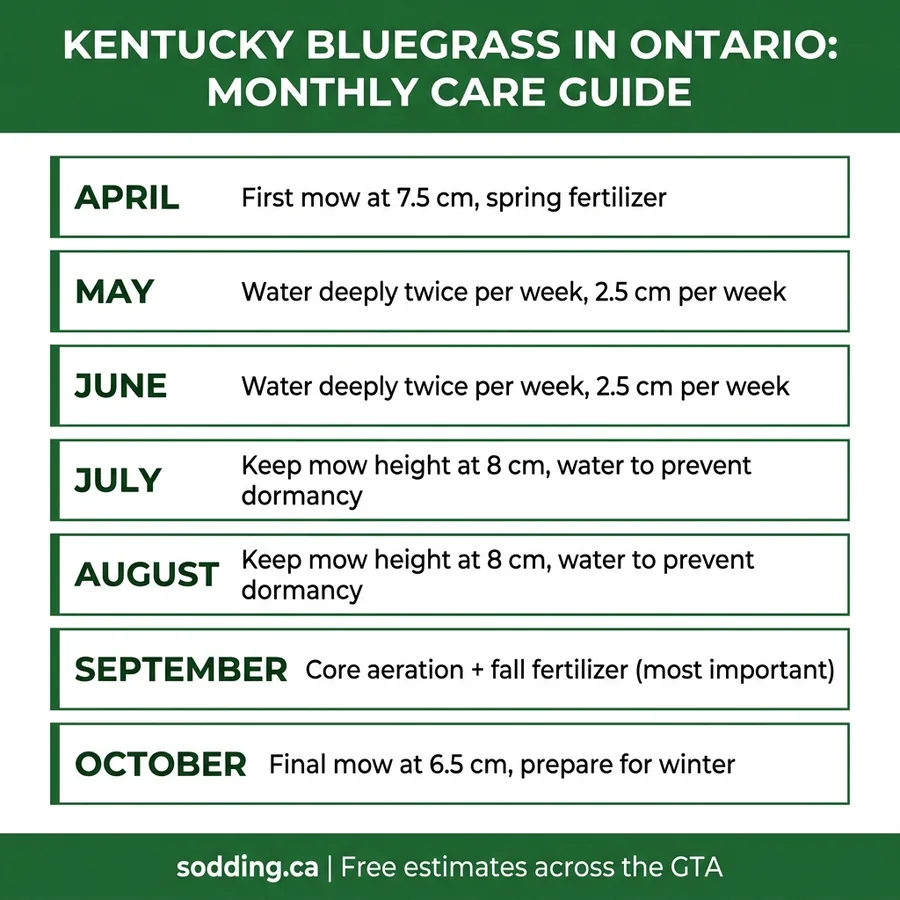
- Late April: first mow of the season. Mow at 7.5 to 8 cm as soon as the lawn is actively growing. Don't mow when the ground is still soft or you'll create ruts.
- Early May: spring fertilizer. Apply a balanced slow-release fertilizer. Avoid heavy nitrogen in spring, it pushes top growth at the expense of roots.
- May through June: consistent watering. Water deeply once or twice a week to a depth of 15 cm. Shallow daily watering produces shallow roots.
- July to August: maintain mow height. Keep mowing height at 7.5 to 9 cm. Don't let the lawn get too long or scalp it. Water 2.5 cm per week if you want to prevent dormancy.
- Early September: core aeration. Aerate annually in early September to reduce compaction in Ontario's clay soils. This is the single highest-value maintenance task for KBG lawns.
- Late September: fall fertilizer. The most important feed of the year. Use a fertilizer with higher potassium to build root reserves for winter. Apply before the first hard frost.
- October: final mow. Drop the mowing height slightly for the last cut of the season, to about 6.5 cm. This reduces the risk of snow mold under heavy snow cover.
Is Kentucky bluegrass right for your yard?
People often ask: What is the best grass for Ontario lawns?
Kentucky bluegrass is the best overall choice for open, sunny Ontario yards that get regular maintenance. For shaded lots or low-maintenance situations, fine fescue is usually a better fit. If you want a lawn that stays green through summer drought without irrigation, tall fescue blends are worth considering. Most Ontario sod suppliers carry all three as options.
Kentucky bluegrass is the right choice if your yard has full sun, you're willing to water during summer dry spells, and you want a lawn that self-repairs and looks consistently good. It is not the right choice if you have more than 30 percent of your lawn in heavy shade, or if you want a lawn that survives on minimal care and no summer irrigation.
If you're in North York or Markham and not sure which variety suits your yard, Sodding Canada assesses each installation site individually. Book a free consultation and we'll walk you through the options.
Download the free quick guide
Save this guide as a PDF and keep it handy for your next lawn project.
Kentucky Bluegrass for Ontario Lawns: What You Need to Know — Free PDF GuideFrequently asked questions
Is Kentucky bluegrass good for Ontario lawns?
Yes. Kentucky bluegrass is the most widely planted turfgrass in the GTA and Ontario broadly. It handles our freeze-thaw winters well, tolerates dry Ontario summers, and produces a dense, attractive lawn when maintained properly. Its main limitation is shade tolerance, so it is not ideal for lots with heavy tree cover.
Does Kentucky bluegrass go dormant in Ontario summer?
It can. During extended dry periods in July and August, Kentucky bluegrass will naturally go semi-dormant and turn straw-brown to conserve water. This is a survival mechanism, not disease. Regular watering prevents dormancy, and the grass recovers quickly once rain or irrigation returns.
How often should I water Kentucky bluegrass in Ontario?
Established Kentucky bluegrass needs about 2.5 cm of water per week during the growing season. Water deeply and infrequently, ideally early in the morning, to encourage deep root development. Shallow daily watering produces shallow roots that stress more easily during dry periods.
Can Kentucky bluegrass grow in shade?
Kentucky bluegrass prefers 6 or more hours of direct sun per day. In areas with 4 to 6 hours of sun, it will survive but thin out over time. In heavy shade, under dense tree canopies, it will struggle and likely die back. Fine fescue blends are a much better option for shaded Ontario yards.
What is the best fertilizer for Kentucky bluegrass in Ontario?
A slow-release nitrogen fertilizer applied in late September is the most important feed of the year for Kentucky bluegrass in Ontario. Fall feeding builds root reserves over winter and produces a thick, healthy start the following spring. A lighter application in early May is the second key feeding. Avoid heavy nitrogen in summer heat.
Sodding Canada supplies and installs Kentucky bluegrass sod across Toronto, Vaughan, and communities throughout the GTA. Questions about which variety suits your yard? Book a free site assessment and we’ll give you a straight answer.
Thinking about replacing the lawn instead? Kentucky bluegrass is what almost every lawn we lay is made of. If you would rather have it installed than grown from seed, read what our sod installation service includes, see what sodding costs per square foot, or start with our sod installation in Toronto page.
This guide covers Kentucky bluegrass on its own. For how it stacks up against tall fescue, fine fescue and perennial ryegrass, and which one belongs in your yard, start with our guide to the best grass seed for Ontario lawns.