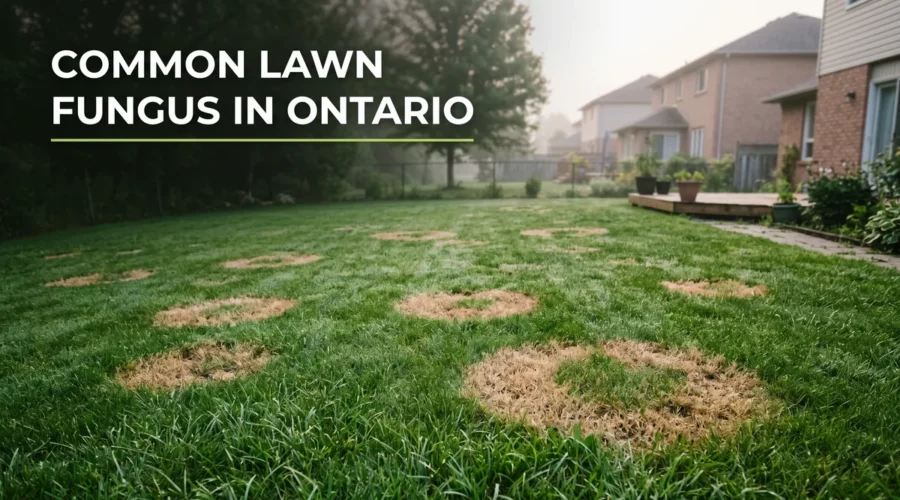
You walk out one humid August morning, and there it is: a ring of straw-coloured grass that was green last week, with a faint white cobweb shimmer across the blades before the dew burns off. That is the calling card of common lawn fungus in Ontario, and our hot, sticky summers are exactly the conditions these diseases love. The good news is that most of them are manageable once you know what you are looking at. The team behind our lawn services across the GTA sees these patterns every season, and the patterns are surprisingly readable.
This guide is about the lawn fungus Ontario homeowners actually run into, how to tell them apart from drought and grubs, what you can do about them within Ontario’s rules, and when it is time to call in help. We will keep the science light and the advice practical.
Why does lawn fungus show up in Ontario lawns?
Fungal spores live in virtually every lawn all the time. They only become a visible disease when conditions tip in their favour, and an Ontario summer hands them everything they need: warmth, humidity, and grass blades that stay wet for long stretches. Add a stressed lawn, from drought, compaction, or over-fertilizing, and the spores get the opening they were waiting for.
That is the key insight for homeowners. Fungus is usually a symptom of conditions, not bad luck. Fix the conditions, and most diseases fade on their own. That is why the management advice further down focuses on water, air, and mowing before it ever reaches for a product.
Identifying the common culprits
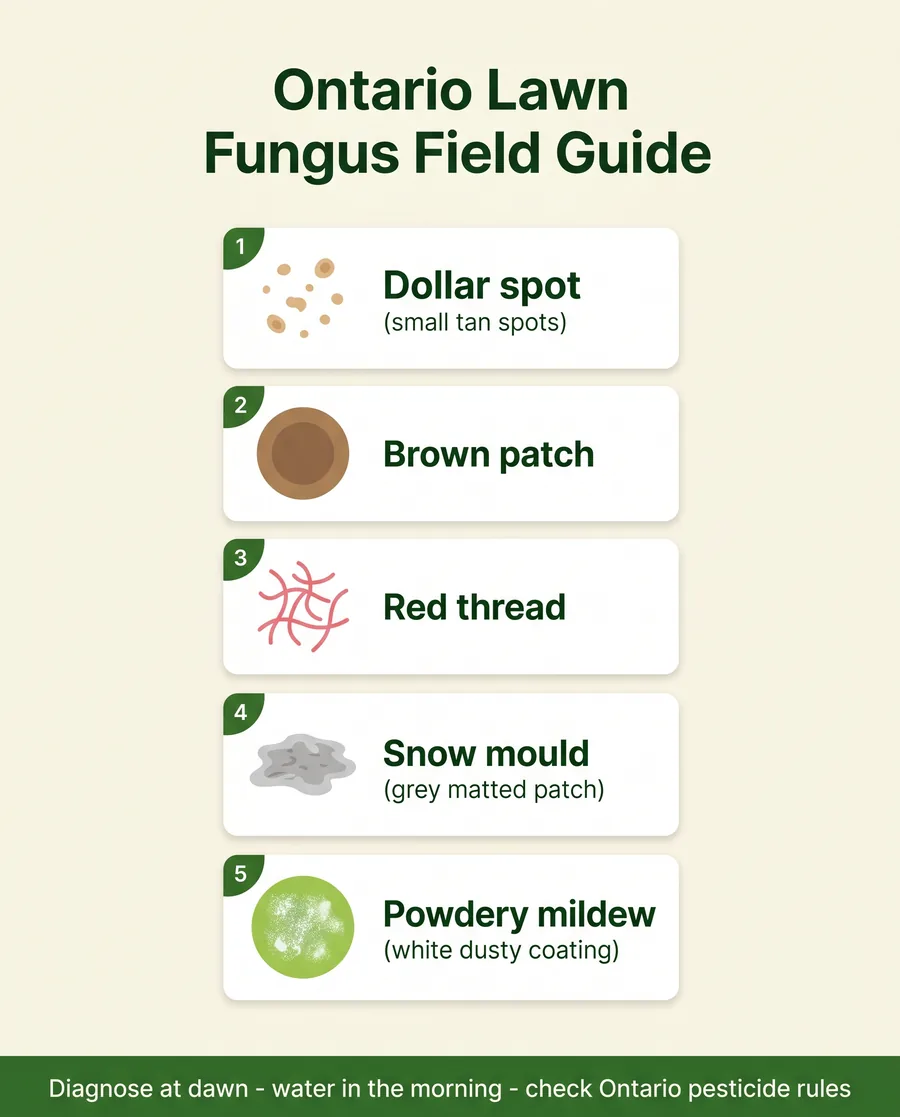
Most Ontario lawn diseases fall into a handful of recognizable patterns. Look at the size of the patches, the colour of the affected blades, and whether you can spot fine threads in the early morning.
- Dollar spot. Small, silver-dollar-sized tan or straw spots, often the first you will notice. Many small spots can merge. Thrives in warm, humid weather, especially when nitrogen is low.
- Brown patch. Larger circular patches, from a few inches to several feet, of light brown grass. Worst on the hottest, most humid stretches of summer. A faint smoke-grey ring can edge the patch in the morning.
- Red thread. Pinkish-red threadlike strands binding the blades, with patches that look ragged and tan from a distance. Common in cool, wet spring and fall weather and on under-fed lawns.
- Snow mould. Matted, crusty grey or pink circular patches that appear as the snow melts in early spring, where snow sat too long over unmown grass.
- Powdery mildew. A white, dusty coating on the blades, most common in shady, poorly ventilated spots under trees.
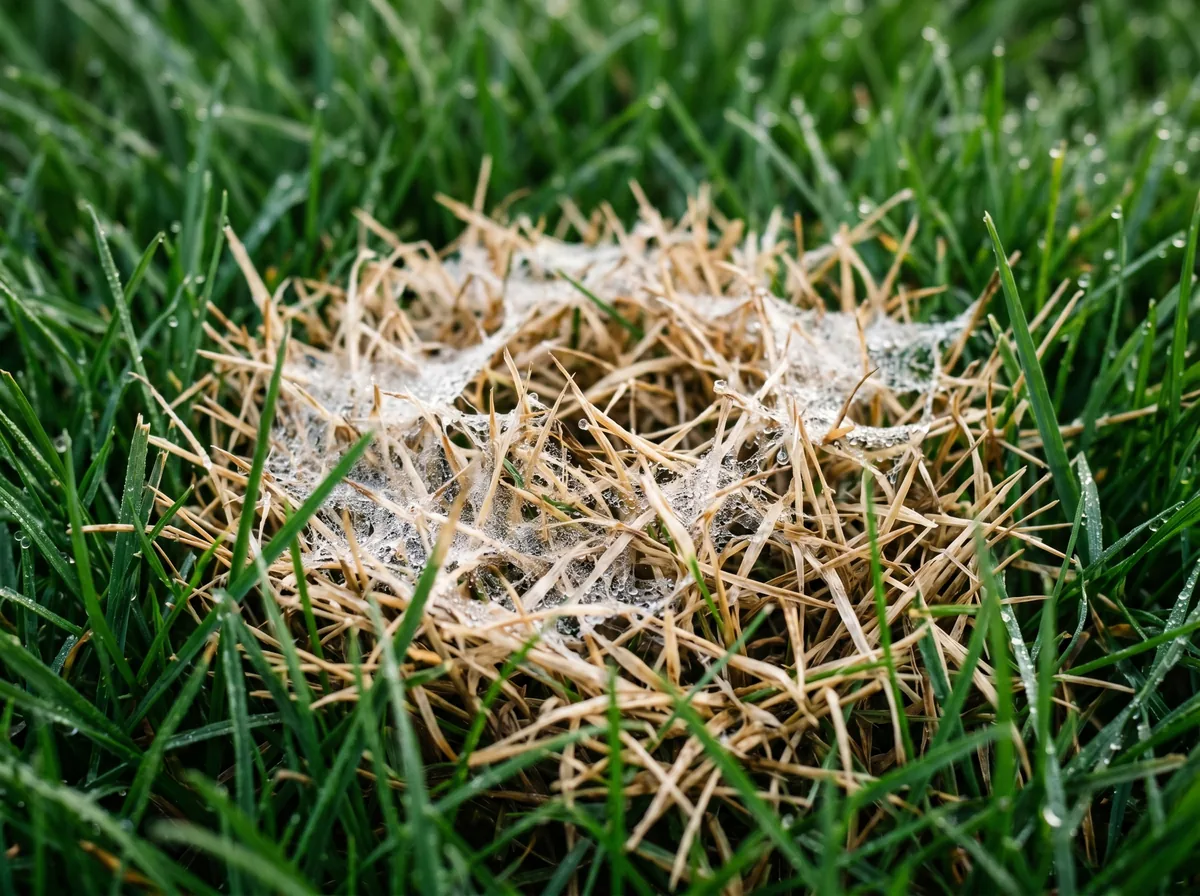
Did you know that morning cobweb is the disease itself?
The white, web-like film you sometimes see across a patch before the dew dries is mycelium, the living body of the fungus. It is one of the most reliable ways to confirm you are dealing with a fungal disease rather than drought or pet damage. By mid-morning, it disappears, so the best time to diagnose a lawn disease is right after sunrise while the dew is still down.
Is it really fungus, or something else?
Plenty of brown patches get blamed on fungus when the real cause is something simpler. Before you treat for disease, rule out the look-alikes, because the fixes are completely different.
- Drought stress. Browning that follows the sunniest, driest areas, with no rings or mycelium, is usually thirst, not disease. It greens up after a deep watering.
- Grub damage. Grass that lifts up like loose carpet, with the roots chewed away underneath, points to grubs rather than fungus. Our guide to grub damage in Ontario lawns shows how to confirm it.
- Dog spots and spills. Sharp-edged dead patches with a dark green ring around them are typically pet urine, not a pathogen.
- Dull mower blades. Frayed, whitish blade tips across the whole lawn give a hazy brown cast that looks like disease but is really mechanical damage.
Red flag: Do not reach for a fungicide first
If you treat a drought or grub problem with a fungicide, you spend money, put an unnecessary product on your lawn, and the problem keeps going. Always confirm it is actually a fungal disease, ideally by spotting the morning mycelium or the classic patch pattern, before considering any treatment. When you genuinely cannot tell, a proper lawn assessment or a licensed lawn-care professional will save you guesswork.
Managing fungus the smart way
Please note: The tips here are for general guidance only. Sodding Canada is not responsible for any damage, cost, or loss resulting from action taken based on this content. Every lawn is different; soil, drainage, sun, and existing grass health all change what the right fix is. If a step involves grading, heavy removal, drainage changes, or treating a problem you cannot confidently identify, have your yard assessed in person or call a licensed lawn-care professional first.
For the common summer diseases, cultural fixes, the changes you make to how you care for the lawn, do most of the heavy lifting. They cost little and they attack the conditions the fungus depends on.
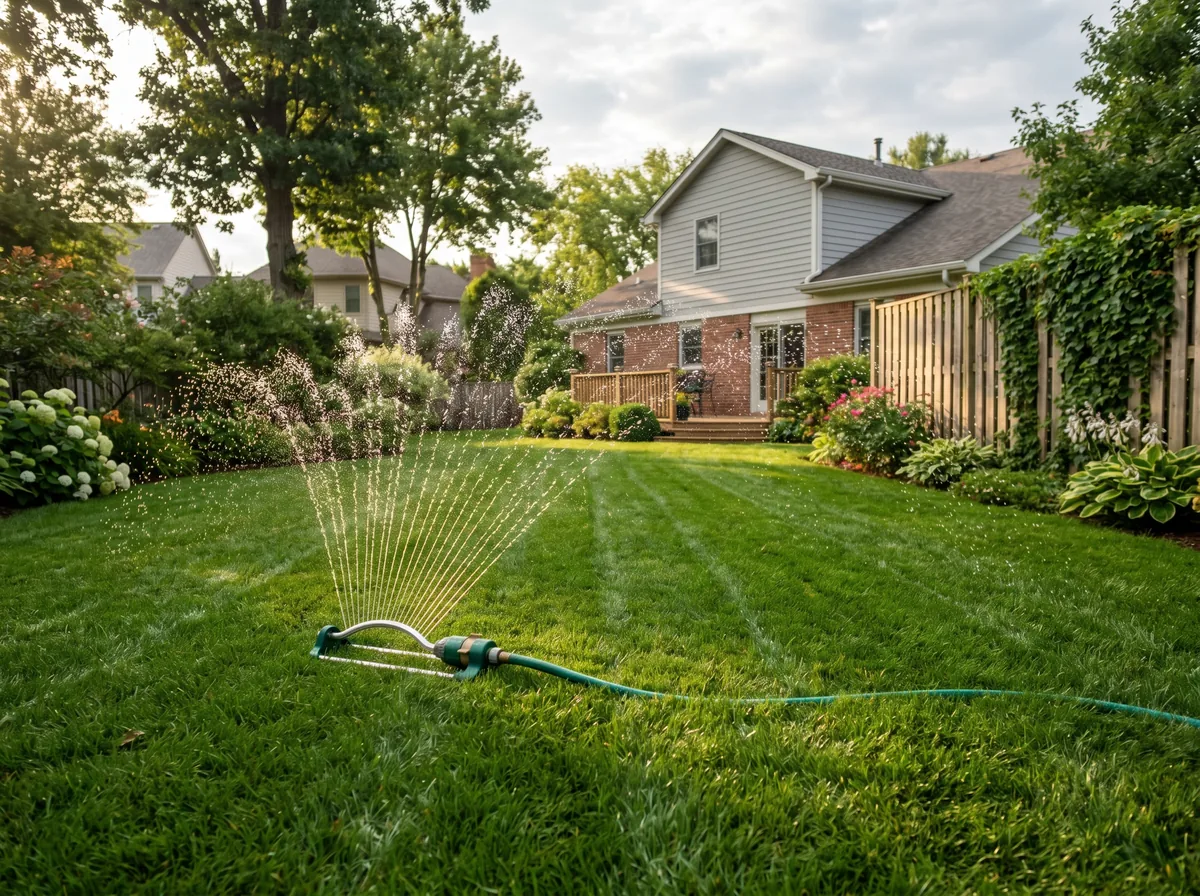
- Water early and deeply. Water once or twice a week in the early morning so blades dry quickly. Never water in the evening, which leaves grass wet all night, the single biggest driver of fungal disease.
- Mow high and keep blades sharp. Taller grass is more resilient and a clean cut heals faster than a torn one. Bag clippings while a disease is active to avoid spreading spores.
- Ease off the nitrogen. Too much quick-release fertilizer pushes soft, disease-prone growth. Feed appropriately for the season instead.
- Improve air and light. Aerate compacted soil, dethatch a heavy thatch layer, and prune back shade where you can so the lawn dries faster.
Pro tip: Stop the evening watering habit
If you change only one thing, change when you water. Grass that stays wet from dusk until dawn is the perfect incubator for nearly every common lawn fungus. Shift your sprinkler or irrigation timer to run before sunrise, finishing early enough that blades dry within a couple of hours. Many homeowners watch a recurring summer disease disappear from this one adjustment alone, with no product at all.
Treatments and Ontario’s pesticide rules
When cultural fixes are not enough and a disease is genuinely spreading, some homeowners consider a fungicide. Before you do, it is important to understand that Ontario regulates the cosmetic use of lawn and garden pesticides. Only certain lower-risk products are permitted for cosmetic use on a home lawn, and every product must be applied strictly according to its label. You can check the current provincial guidance on the Ontario government pesticides page before buying or applying anything.
Ontario pesticide rules: Ontario restricts the cosmetic use of many lawn and garden pesticides. Only products allowed for cosmetic use under provincial rules may be applied to a home lawn, and every product must be used exactly as its label directs. Before reaching for any treatment, check the current provincial guidance on the Ontario government pesticides page, and when a problem is serious or you are unsure what you are dealing with, consult a licensed lawn-care professional rather than guessing. Sodding Canada does not recommend applying any pesticide not permitted under Ontario rules.
In practice, for the everyday diseases like dollar spot, brown patch, and red thread, a healthy lawn under good cultural care rarely needs a chemical treatment at all. If a disease is severe, persistent, or you simply cannot identify it with confidence, the safest path is to bring in a licensed lawn-care professional who knows which products are permitted and how to apply them correctly, rather than experimenting on your own lawn.
Preventing the next outbreak
Prevention is mostly the same good habits that manage an active disease, done year-round so the fungus never gets its opening. A thick, well-fed, properly watered lawn shrugs off the spores that overwhelm a stressed one.
- Water deeply and in the morning, never at night.
- Mow high with a sharp blade and avoid scalping.
- Aerate yearly to relieve compaction and manage thatch.
- Choose disease-resistant grass when you establish or renew a lawn, and follow proper first 30 days care for new sod so it roots strong.
- For a deeper dive, see our guides to common lawn diseases and prevention and preventing disease in new sod lawns.
Frequently asked questions
How do I know if my brown patches are fungus and not just dry grass?
The most reliable test is to look at the lawn just after sunrise while the dew is still down. Fungal diseases often show a faint white, cobweb-like film of mycelium across the affected blades, and the patches tend to be circular or ring-shaped. Drought browning, by contrast, follows the sunniest, driest parts of the yard, has no rings or threads, and greens up after a deep watering. If the grass lifts like loose carpet, suspect grubs instead. When the pattern is still unclear, an in-person lawn assessment removes the guesswork before you spend money on any treatment.
Can I use a fungicide on my lawn in Ontario?
Ontario regulates the cosmetic use of lawn and garden pesticides, so only certain permitted lower-risk products may be applied to a home lawn, and they must be used exactly as the label directs. Before buying or applying anything, check the current rules on the Ontario government pesticides page. For most everyday diseases, a healthy lawn under good watering and mowing habits recovers without any chemical at all. If a disease is severe or you are unsure what it is, the safest route is to consult a licensed lawn-care professional rather than treating it yourself.
Will lawn fungus spread to the rest of my yard or to my neighbour’s lawn?
It can spread, especially while conditions stay warm and wet, which is why prompt management matters. Spores move on wind, water, shoes, and mower blades, so an active patch can seed new ones nearby. To slow it, bag your clippings while a disease is active, clean your mower after cutting an infected area, and avoid walking across wet, diseased turf and then onto healthy grass. Most importantly, fix the underlying conditions: morning watering, higher mowing, and better airflow. A vigorous, well-cared-for lawn resists the spread far better than a stressed one.
Does lawn fungus come back every year, and how do I stop it?
Many homeowners do see the same disease return each summer, but that usually means the conditions favouring it return too, not that the lawn is doomed. The fix is to change the habits that feed it. Water deeply in the early morning so blades dry fast, never in the evening; mow high with a sharp blade; aerate yearly to relieve compaction; and avoid over-fertilizing with quick-release nitrogen. Over a season or two of consistent care, most recurring diseases fade. If yours does not, choosing more disease-resistant grass during a lawn renewal can break the cycle for good.
What to do next
Lawn fungus looks alarming, but it is rarely the end of your lawn. Diagnose it at dawn, rule out the look-alikes, and fix the conditions before you reach for anything stronger.
- Inspect at sunrise and confirm it is fungus, not drought, grubs, or pet damage.
- Shift watering to early morning and raise your mowing height this week.
- Check Ontario’s pesticide rules before considering any product, and call a licensed pro for anything severe or unclear.
Download the free quick guide
A printable cheat sheet to identify the common Ontario lawn diseases and manage them the right way.