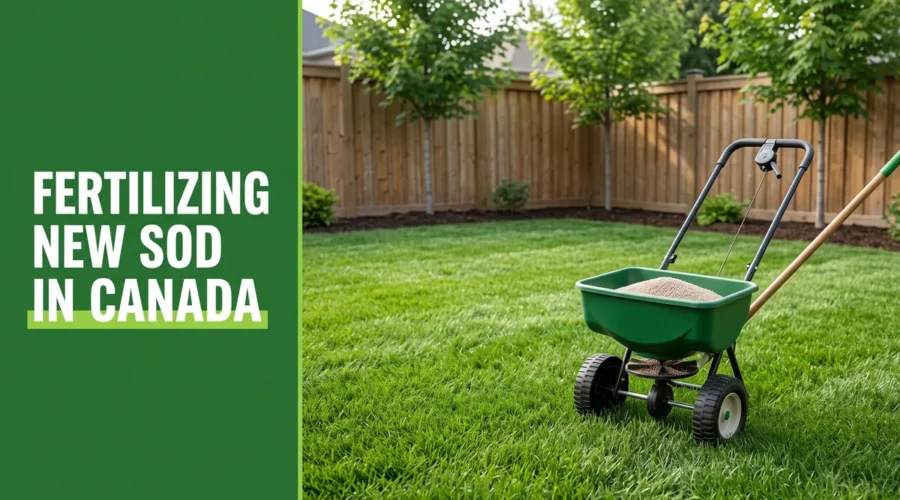
Here is the honest answer up front on fertilizing new sod Canada homeowners need before spring: do not touch it with fertilizer the day it goes down. Fresh professional sod installation already carries a small starter charge from the farm, and the roots need to knit into your soil before they can use much of anything. Feed too early and you push top growth the plant cannot support yet.
Wait too long, though, and a new lawn can stall out just when it should be racing to establish. The sweet spot, the right blend, and the seasonal rhythm all matter more than most homeowners think. Here is the full schedule, the numbers on the bag that actually count, and the mistakes that quietly cook a new lawn.
When to First Fertilize New Sod
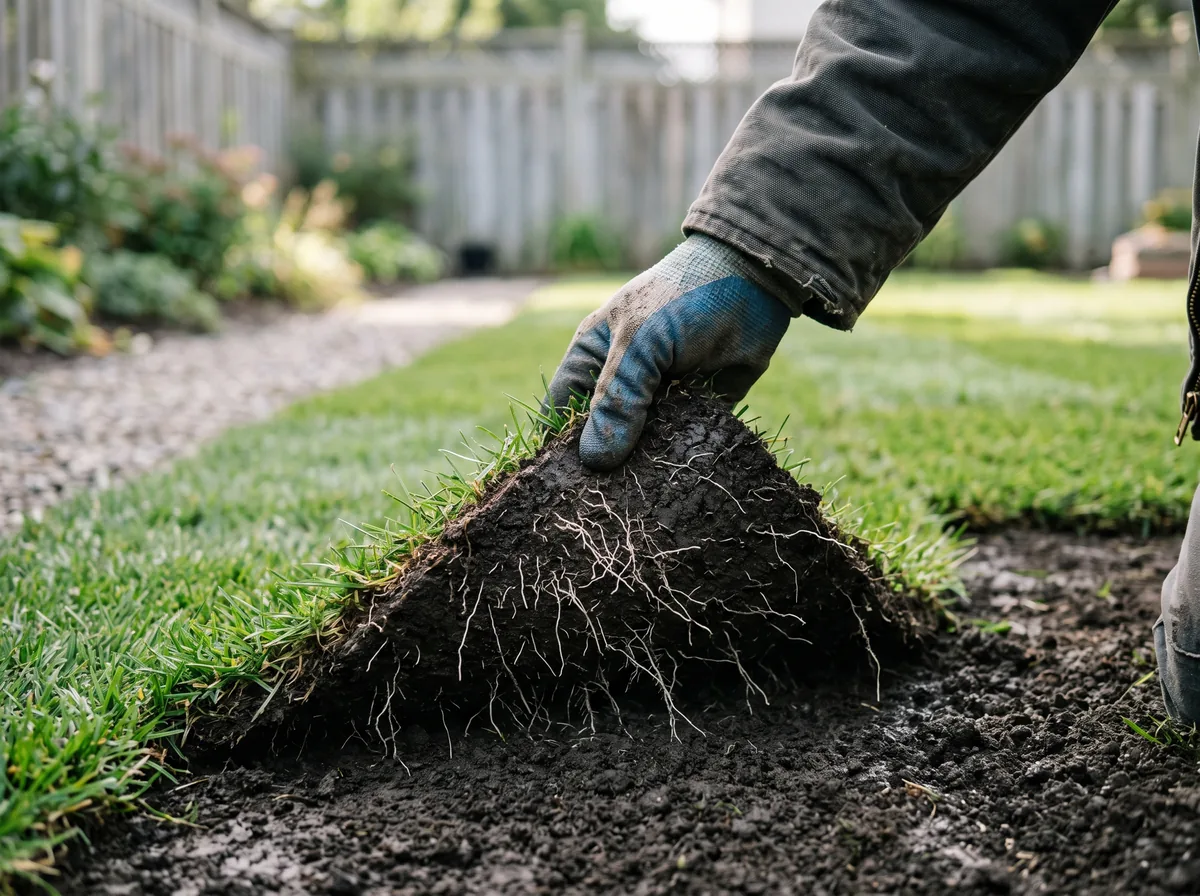
New sod arrives already rooted in a thin mat of soil, so it is not starving on day one. The plants are living off reserves and whatever nutrients came with the farm. Your job in the first few weeks is water, not food. The general Canadian rule of thumb is to hold off on your first real feeding until the sod has knitted down, which usually takes three to four weeks depending on temperature and how consistently you water.
The tug test tells you when the roots are ready. Grab a corner and lift gently. If it peels up like a rug, the roots have not anchored, and it is too soon to fertilize. If it resists and you feel it holding to the ground, the lawn can start using a proper feeding. In a warm Ontario June, anchoring can happen in under three weeks. In a cool, wet spring or a late-fall install it can take longer.
Quick Take
Skip fertilizer at install. Water deeply, wait three to four weeks, then run the tug test. Roots that hold to the soil are your green light for the first real feeding, not the calendar.
What Starter Fertilizer to Use and Reading the NPK
Every bag of fertilizer lists three numbers, the NPK ratio: nitrogen, phosphorus, and potassium in that order. Nitrogen (N) drives leaf and blade growth. Phosphorus (P) feeds root development. Potassium (K) builds stress and cold tolerance. For a brand new lawn, you want a starter blend that leans toward phosphorus and potassium rather than a high-nitrogen bag built for pushing green top growth on an established lawn.
A typical starter fertilizer runs something like 10-10-10, 12-12-12, or a dedicated blend such as 18-24-12. The higher middle number is doing the work you want on new sod, growing roots. One important Canadian note: many provinces and municipalities restrict or ban phosphorus fertilizer on established lawns to protect waterways, but most allow it for new lawns and seeding. Check the bag and your local bylaw. For how fertilizer is labelled and regulated nationally, the Canadian Food Inspection Agency fertilizer standards are the reference point.
Did You Know
Slow-release nitrogen is gentler on new sod than a quick-release bag. It feeds the lawn steadily over six to eight weeks instead of dumping everything at once, which lowers the odds of burning tender new roots and means fewer applications through the season.
A Season-by-Season Fertilizing Schedule
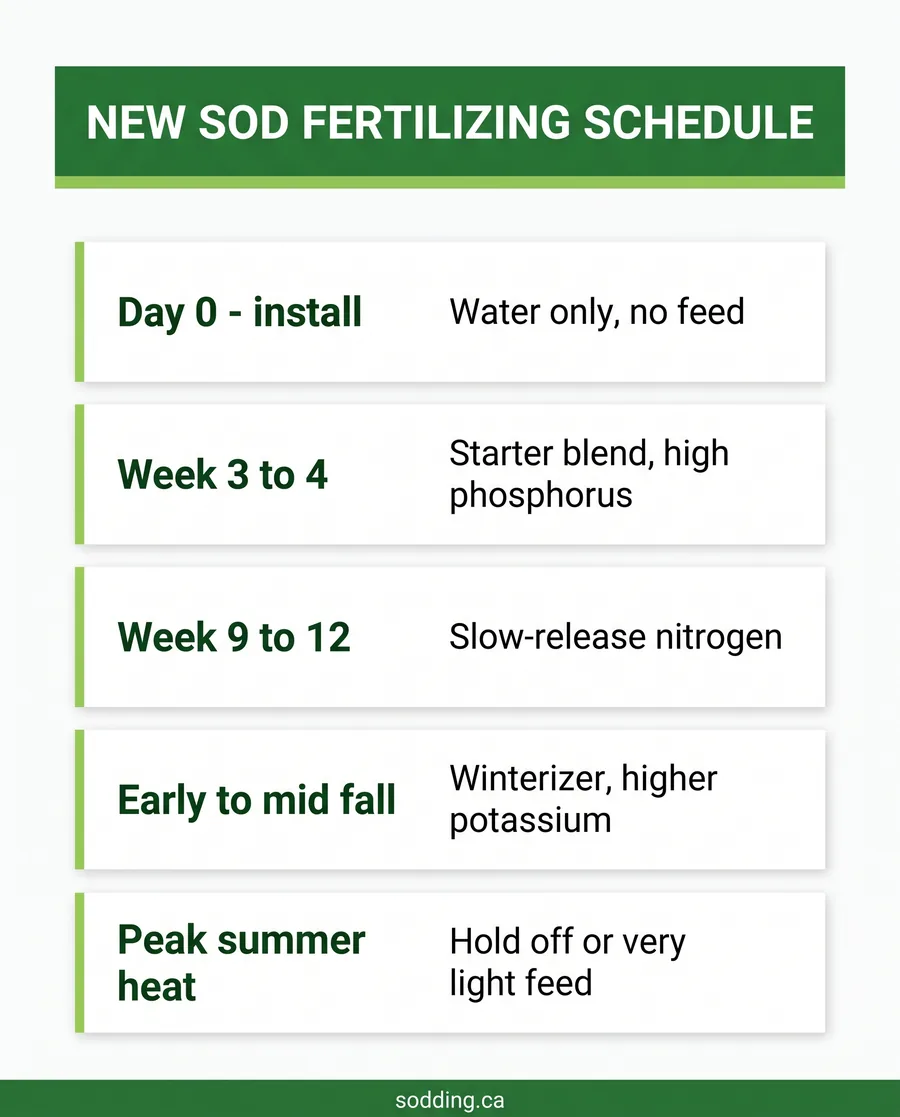
Once the sod is anchored, a new lawn in most of Canada follows the cool-season rhythm: it does its best growing in spring and fall, and it coasts through the heat of summer. Your feeding schedule should mirror that. The table below is a planning guide for a lawn installed in the growing season across zones 4 to 6, which covers most of southern Ontario, the Lower Mainland, and the Maritimes. Push everything later in colder zones.
| Timing | What to Apply | Why |
|---|---|---|
| At install (day 0) | Nothing extra, water only | Roots cannot use much feed yet; farm starter is enough |
| 3 to 4 weeks after install | Starter blend, high middle number (P) | Roots are anchoring and need phosphorus |
| 6 to 8 weeks after the first feed | Balanced or slow-release nitrogen | Steady blade growth and thickening |
| Early to mid fall | Fall or winterizer blend (higher K) | Builds cold tolerance and root reserves |
| Peak summer heat | Hold off or use very light slow-release | Feeding in drought stress can scorch the lawn |
This schedule is a general guide for cool-season lawns in Canadian zones 4 to 6 and is not a prescription for your specific lawn. Soil condition, grass blend, install date, and local phosphorus bylaws all change the plan. Always follow the product label rate and confirm local fertilizer restrictions before you apply.
Save Your Money
You do not need a different specialty bag for every feeding. One quality slow-release lawn fertilizer plus a fall winterizer covers a new lawn’s whole first year. Buying four different boutique blends is marketing, not agronomy.
How Watering and Fertilizer Work Together
Fertilizer without the right watering does nothing but sit on the surface, and on new sod it can burn. Granular feed has to dissolve and move into the root zone, so you water it in after every application. For the first few weeks the priority is deep, frequent watering to keep the sod and the soil beneath it damp, which is exactly what lets roots reach down and eventually take up nutrients. Our full watering guidelines for new sod break down the day-by-day amounts.
Once you begin feeding, the pattern shifts. Water the fertilizer on the same day, then ease back toward deeper but less frequent watering to encourage roots to chase moisture downward. A lawn watered lightly every day grows a shallow, needy root system. A lawn watered a few times a week deeply grows the deep roots that carry it through a hot GTA August. Fertilizer amplifies whichever habit you build.
Pro Tip
Feed in the cool of early morning or evening, never in the heat of midday, and never on sod that is already drought-stressed and blue-grey. Fertilizing a thirsty lawn is the fastest way to streak it with chemical burn.
Common Fertilizing Mistakes That Damage New Sod
Most new-sod problems that look like disease or bad sod are really feeding mistakes. These are the ones we see most often on GTA lawns:
- Fertilizing on day one. The roots cannot use it and the salts can burn tender new sod. Wait for anchoring.
- Reaching for a high-nitrogen bag. Too much nitrogen forces blade growth the shallow roots cannot support, leaving a lush lawn that browns in the first heat wave.
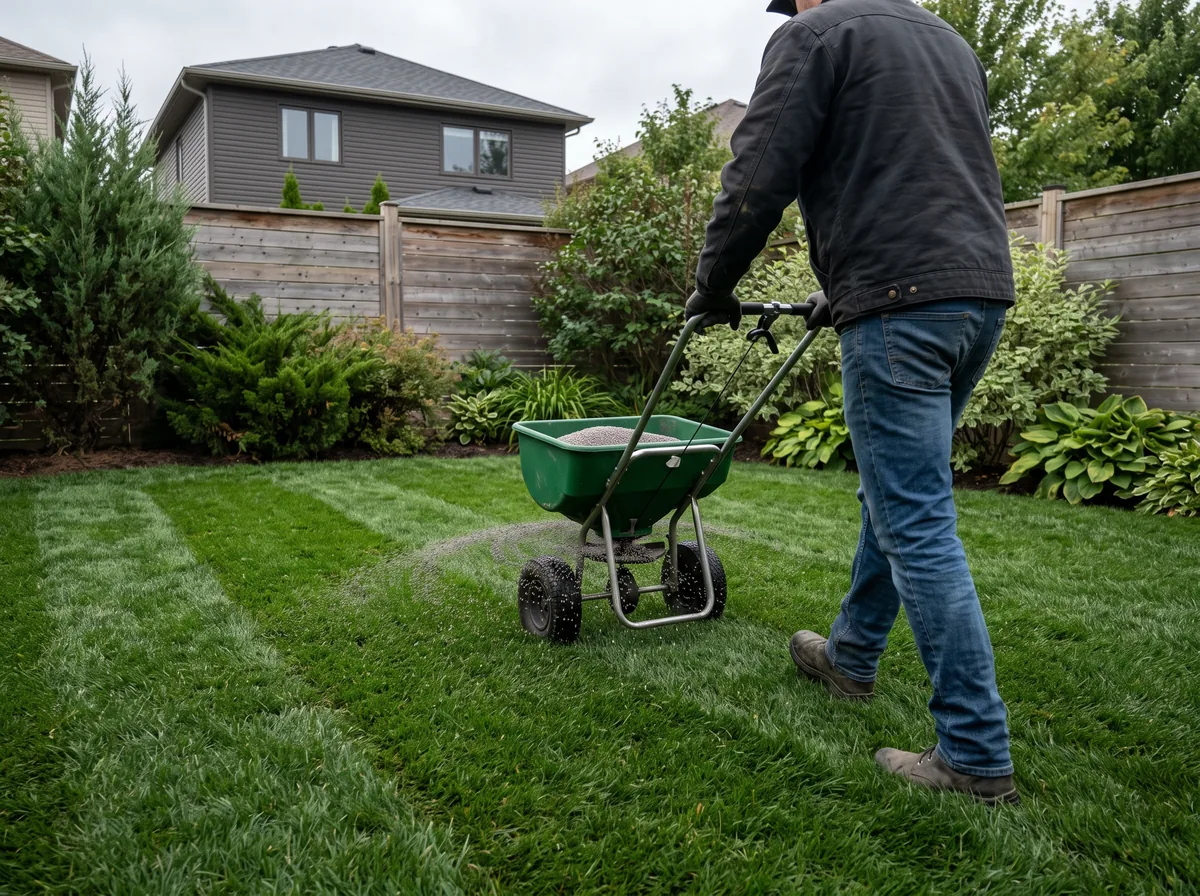
- Spreading by hand. Uneven handfuls create dark green streaks and burned patches. A calibrated spreader is worth it.
- Skipping the water-in. Granules left dry on the blades can scorch and simply will not feed the plant.
- Feeding in a heat wave. A stressed summer lawn cannot process a full feeding and burns instead.
- Ignoring local phosphorus rules. Applying a banned phosphorus blend on an established lawn can mean fines and runoff into local water.
Red Flag: Yellow or Brown Streaks After Feeding
Straight-line yellow or brown streaking a day or two after fertilizing is almost always chemical burn from an uneven spread or a missed water-in, not disease. Water the affected areas heavily to flush the salts, hold off on any further feeding, and give the lawn two to three weeks to recover before you assess the damage.
“Put down a full bag of high-nitrogen fertilizer on brand new sod because I wanted it green fast. Two weeks later half of it was burned yellow. Wish I’d waited and used a starter blend instead.”
— r/lawncare homeowner, 2024
How to Fertilize New Sod Step by Step
The steps below are general guidance for a healthy, anchored new lawn only. Lawn fertilizer is a chemical product that can burn plants, harm pets, and pollute waterways if misused. Read and follow the product label, wear protection, keep children and pets off until watered in and dry, and confirm local phosphorus and fertilizer bylaws first. Sodding Canada is not responsible for damage or injury from work done based on this article.
- Confirm the sod is anchored. Run the tug test at three to four weeks; only feed once the roots hold to the soil.
- Choose a starter blend. Pick a starter or balanced fertilizer with a strong phosphorus (middle) number, slow-release nitrogen preferred, and check your local phosphorus bylaw.
- Calibrate your spreader. Set the spreader to the rate printed on the bag for your square footage. Never guess or hand-broadcast.
- Apply on a calm, cool day. Spread in early morning or evening, going back and forth in even overlapping passes to avoid streaks.
- Sweep off hard surfaces. Blow or sweep any granules off the driveway, walk, and gutters so they do not wash into storm drains.
- Water it in the same day. Run about 1 centimetre of water to move the fertilizer off the blades and into the root zone.
- Wait and watch. Give it six to eight weeks before the next feeding, and adjust the plan for the season and the weather.
People Often Ask: Can I Use a Weed and Feed on New Sod?
Not yet. The herbicide in a weed-and-feed can damage sod that has not fully rooted, and new lawns usually need several months before they tolerate one. Feed with a straight starter or balanced fertilizer first and deal with weeds separately once the lawn is established, typically after the first mowing season.
Download the Free Quick Guide
A one-page reference for when to feed new sod, which starter blend to use, and how to avoid burn.
Frequently Asked Questions
Want the lawn without the guesswork on feeding, timing, and bylaws? Sodding Canada supplies and installs fresh sod and sets up new lawns for a strong first season across Markham, Aurora, Burlington, and the wider GTA. Book a sodding service, and we will hand off a lawn that is ready to thrive, with the aftercare plan to match.