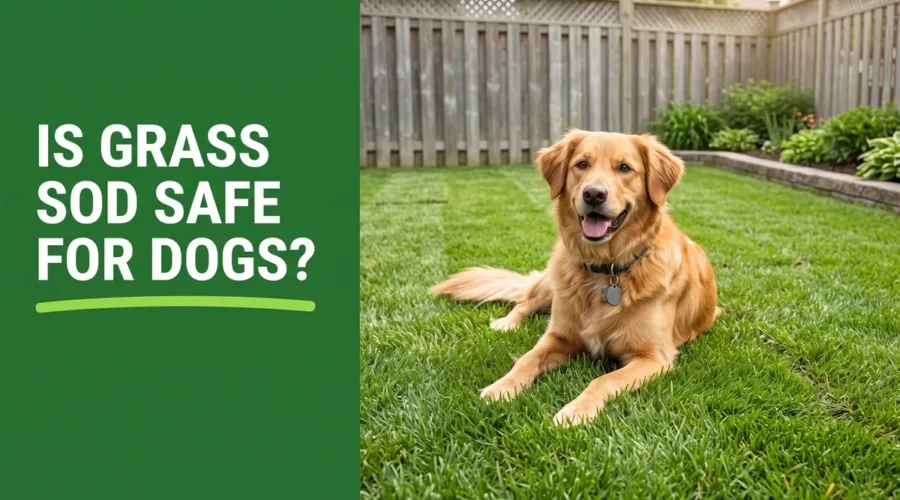
Here is the reassuring part first: grass sod is one of the safest lawn surfaces you can give a dog. Real turf is soft on paws, cooler than concrete or artificial turf on a hot Toronto afternoon, and the grass plants themselves are not toxic to pets. When people run into trouble, it is almost never the sod. It is the timing around a fresh sod installation and the products used on the lawn afterward. Get those two things right and your dog and your new grass can share the yard happily.
So the honest answer to “is it safe?” is yes, with a short list of caveats. New sod needs a settling-in window to root before paws start tearing at the seams, and any fertiliser or weed control you apply has its own re-entry timing. Below is exactly how long to wait, what to watch for, and how to keep those yellow urine spots from wrecking a lawn you just paid for.
Is grass sod safe for dogs?
Grass sod is grown from common cool-season species like Kentucky bluegrass and fescue, and none of these are poisonous if a curious dog nibbles a few blades. Plenty of dogs graze on grass now and then, and a healthy lawn is a far better surface for them than baking artificial turf, gravel, or bare mud that turns into a mess every time it rains. The turf is not the risk. The two things worth thinking about are how new the sod is and what you put on it.
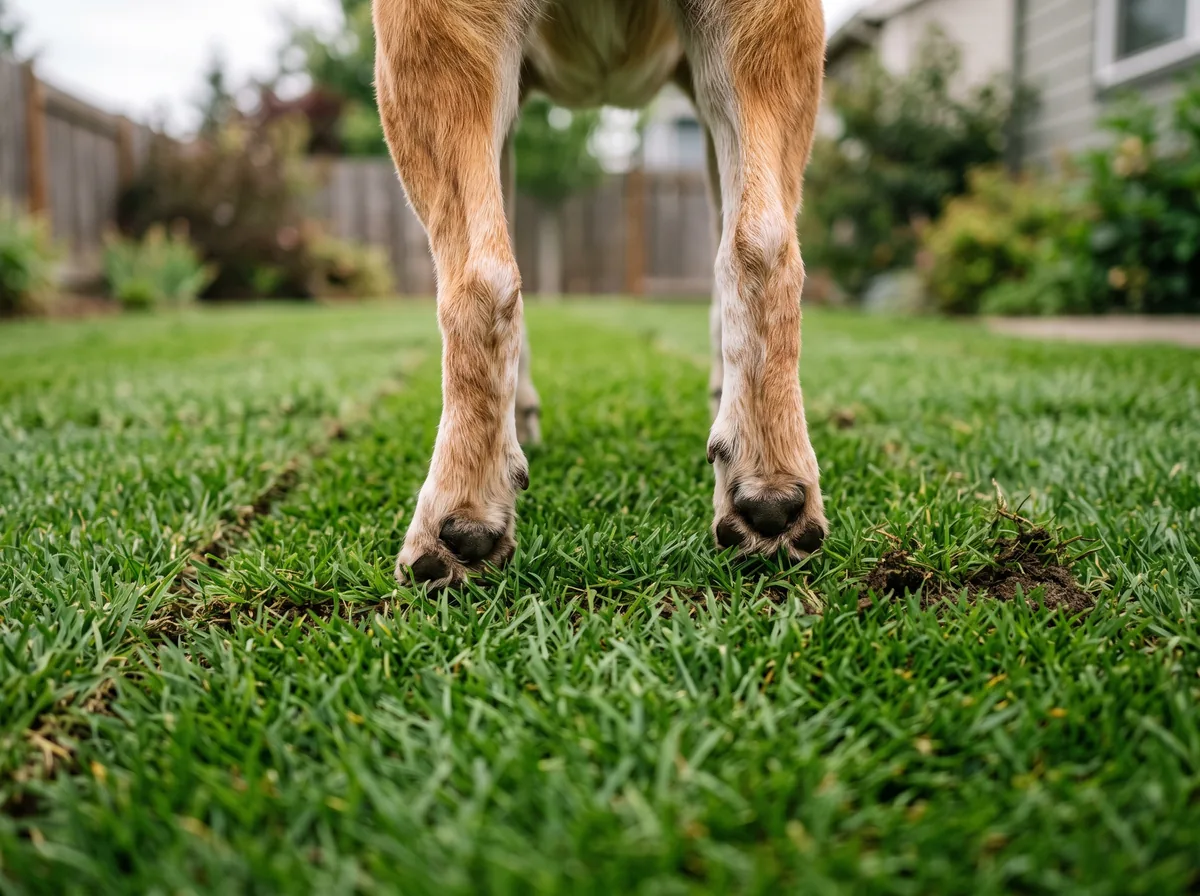
A freshly laid lawn is basically a field of grass plants trying to knit their roots into the soil below. For the first couple of weeks, those roots are shallow, and the seams between rolls lift easily. A dog that digs, sprints, or skids into a turn can peel back a strip of sod before it has anchored. That is a rooting problem, not a safety one, but it is the most common way pets and new grass clash.
Quick take
Grass sod itself is non-toxic and dog-friendly. The real cautions are giving new rolls two to three weeks to root before heavy pet traffic, and following the label re-entry time on any fertiliser or weed product you apply afterward.
The settling-in period before paws hit the lawn
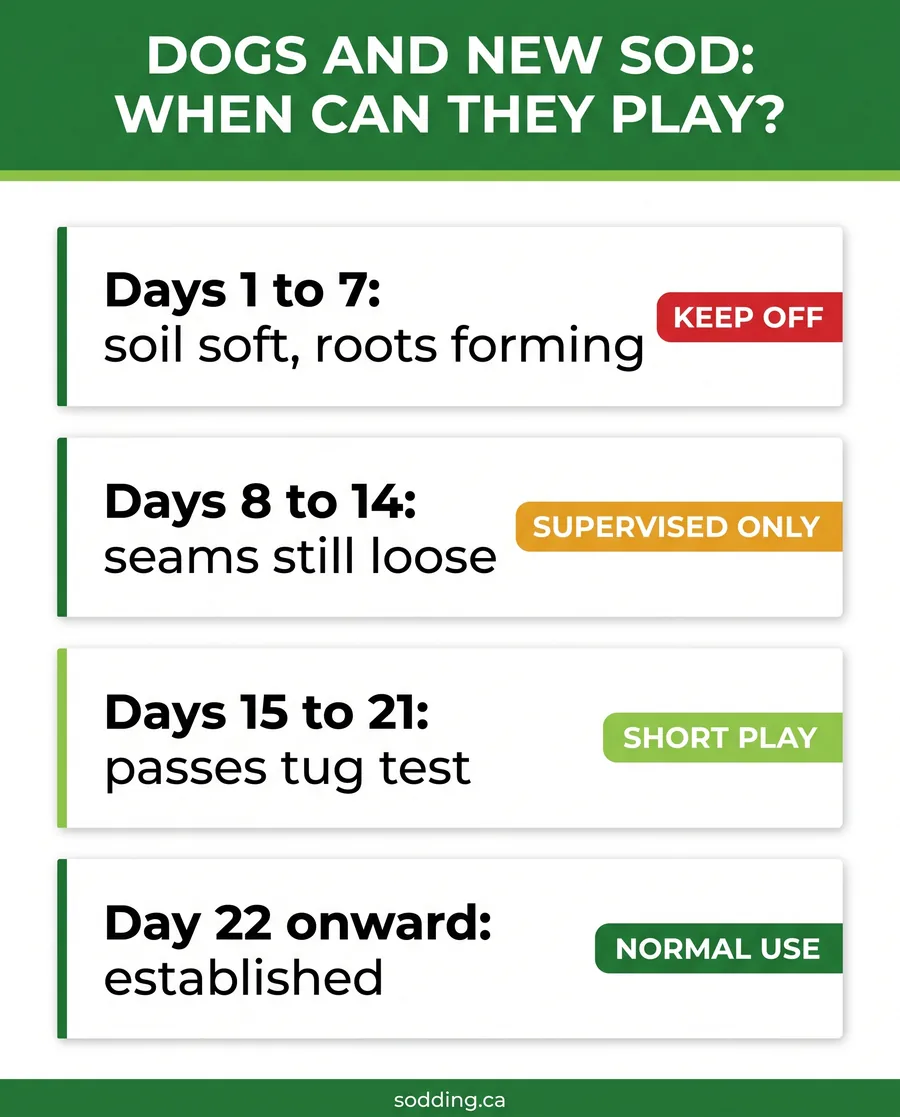
New sod roots in stages, and your dog’s access should follow the same schedule. During the first week the lawn is being watered heavily and the soil underneath is soft, so paw prints sink in and seams shift. By two to three weeks the roots have started to grip, and by the end of the first month most lawns can handle normal use. Ontario’s cool, damp spring and fall actually help here, since sod roots faster in mild weather than in the heat of July.
The simplest test is the tug test: gently lift a corner of a roll. If it resists and feels anchored, the roots have taken hold. If it peels up like a rug, keep the dog off a little longer. Watering also matters for timing. A soaked lawn stays fragile, so try to schedule your dog’s outdoor breaks for when the turf is on the drier side of its watering cycle rather than right after a soak.
| Stage after install | Root status | Dog access |
|---|---|---|
| Days 1 to 7 | Not rooted, soil soft and wet | Keep dogs off entirely, use a leash walk elsewhere |
| Days 8 to 14 | Roots starting, seams still loose | Brief supervised, on-leash visits only |
| Days 15 to 21 | Rooting well, passes the tug test | Short off-leash time, no digging or hard running |
| Day 22 onward | Established, holds firm | Normal use, watch for wear paths and urine spots |
Timing note: These stages are typical ranges for a healthy Ontario lawn. Actual rooting depends on your soil, the season, and how consistently the sod is watered. Results vary with soil, climate, and maintenance, so use the tug test to confirm before letting a dog run on new sod, and confirm details for your specific lawn.
Pro tip
If you have a high-energy dog, set up a temporary path with a few stepping stones or a mulched run along the route it uses most. Giving the dog a clear lane keeps sprint traffic off the softest, newest sections while the rest of the lawn roots in undisturbed.
Fertilisers, weed control, and your dog’s safety
This is where most real pet-safety questions actually live. Fresh sod is usually fine without much feeding at first, but at some point you will fertilise, and many homeowners reach for a weed product too. Ontario makes this easier than it is in a lot of places. The province restricts the cosmetic use of many synthetic lawn pesticides, so most products on the shelf at an Ontario garden centre already fall into lower-risk classes. That said, low-risk is not the same as no-caution.
The general rule is to read the label and respect the re-entry time. Granular fertilisers should be watered in and left to dry before pets return, which usually means keeping the dog off for at least 24 hours or until the granules have dissolved. Iron-based products, cocoa mulch, and some organic fertilisers made from bone or blood meal are worth extra care, since a dog that eats them can get sick. For a clear, trustworthy reference on what is and is not a hazard, the ASPCA Animal Poison Control resource is the one most vets point people toward.
Red flag: What not to leave out
Cocoa bean mulch smells like chocolate and is toxic to dogs. Blood meal and bone meal fertilisers can cause stomach trouble or worse if a dog digs them up and eats them. Slug and snail baits with metaldehyde are dangerous. Keep bags sealed and stored where the dog cannot reach them, and never spread these where a dog grazes without checking the label first.
Dealing with dog urine spots on new sod
Those round yellow or brown patches are not a disease and they are not the sod’s fault. Dog urine is high in nitrogen and salts, and when it lands in one concentrated spot it burns the grass the same way a splash of over-strength fertiliser would. Female dogs and large dogs tend to leave clearer marks simply because they empty in one place. New sod is a bit more sensitive to this while it roots, so it is worth managing early rather than waiting for the damage.
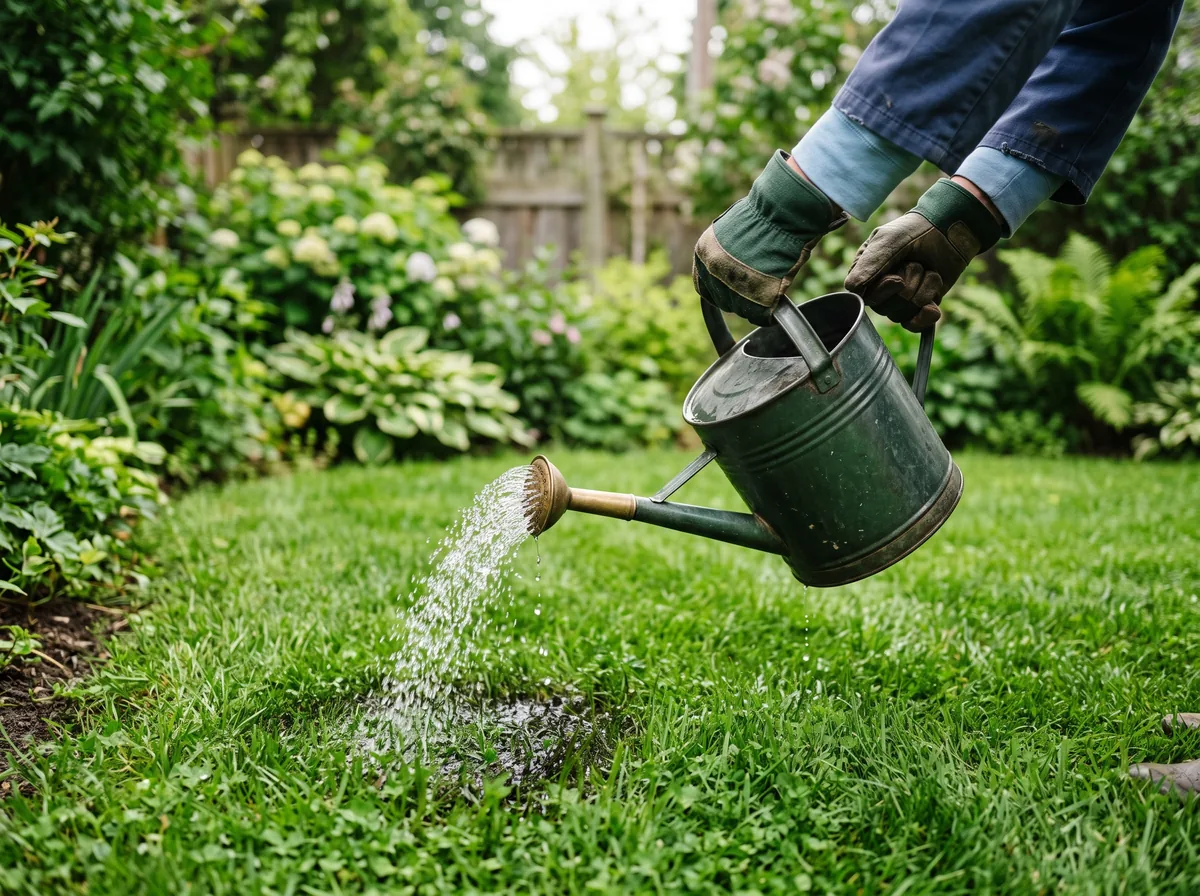
The most effective fix is dilution. If you can rinse the spot with a watering can or a quick pass of the hose within a few minutes of your dog going, you wash the nitrogen down through the soil before it scorches the blades. Encouraging your dog to drink plenty of water helps too, since more dilute urine is gentler on turf. Some owners train a dog to a mulched or gravel toilet corner, which keeps the concentrated spots off the good grass entirely. Skip the fad supplements that claim to neutralise urine, since many are not backed by evidence and a few can affect your dog’s health.
Did you know
It is not the acidity of dog urine that burns your lawn, it is the nitrogen load. That is why a healthy, already well-fed lawn shows spots more easily, and why pouring more fertiliser on a burned patch usually makes it worse rather than better. Water is the antidote, not more nutrients.
Pet-friendly habits for a lawn that lasts
The habits below are general guidance for healthy pets and established lawns. Every dog and every yard is different. Results vary with soil, climate, and maintenance, and you should follow product label instructions and check with your veterinarian about anything your dog may have eaten. Sodding Canada is not responsible for pet health outcomes or lawn results from actions taken based on this article.
Once the sod is established, keeping it green with a dog in the picture comes down to a handful of steady habits rather than any single trick:
- Rinse urine spots soon after your dog goes, especially on newer sections, to dilute the nitrogen before it burns.
- Rotate play and potty areas so no single patch takes all the traffic or all the urine day after day.
- Keep the lawn mowed a touch higher, around 3 inches, so deeper roots and more leaf area shrug off wear better.
- Water deeply and less often once the sod is rooted, which builds a tougher lawn than frequent shallow sprinkles.
- Store all fertilisers, mulches, and pest products sealed and out of reach, and respect every label re-entry time.
- Overseed or patch worn tracks in early fall so the lawn heals before winter and comes back thick in spring.
Save yourself the redo
If you know a dog is going to be a heavy user, tell your installer before the sod goes down. Choosing a harder-wearing blend, prepping the soil for good drainage, and planning a durable traffic path up front is far cheaper than replacing burned or torn sections a season later.
“Put down new sod in the spring and let the dog back too soon. Learned the hard way that two more weeks of patience would have saved me a whole corner of the yard.”
Ontario homeowner, r/lawncare
Download the free quick guide
A one-page checklist for timing, products, and urine-spot habits that keep both your dog and your new lawn healthy.
Frequently Asked Questions
Planning a fresh lawn that has to stand up to a family dog? Sodding Canada preps the soil, chooses a hard-wearing blend, and lays healthy sod across Toronto, Vaughan, Markham, and the wider GTA, so your new grass starts strong. Get in touch for a free quote and tell us about your dog so we can build the lawn around the way your household actually uses the yard.