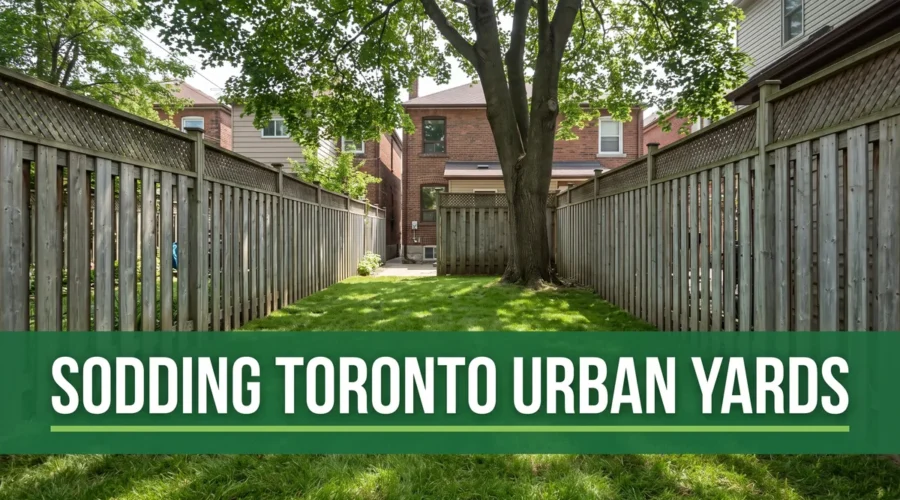
Picture a classic Toronto lot. A narrow semi with a strip of front lawn, a shaded backyard boxed in by fences and a mature maple, and the only way to the rear is a gate barely wide enough for a wheelbarrow. That yard can absolutely have a thick green lawn, but sodding Toronto yards like this is a different job from rolling out turf on a wide open suburban lot. The challenges are real, and they are also solvable. Working with an experienced Toronto sodding team or simply knowing what you are up against turns a frustrating patch of dirt into grass that actually lasts.
Older neighbourhoods, tight access, tree shade, and decades of compacted city soil all stack the deck against new grass. This guide walks through the four issues that trip up the most urban lawns, and the practical fixes for each, so you can plan a project that holds up instead of thinning out by its second summer.
Why sodding in Toronto yards is different
In a new suburban subdivision, a sod crew can back a pallet truck up to the lawn, spread fresh topsoil, and roll out turf on a blank canvas. The city rarely offers that luxury. Sodding Toronto properties usually means working around fences, laneways, decks, and trees that were planted long before the current owner arrived. The lots are smaller, the soil has been driven over and built on for a hundred years, and the light is often filtered through canopy or blocked by a neighbouring wall for half the day.
None of that means you are stuck with a patchy lawn. It means the prep and the sod choice matter more than they would in the suburbs. The same roll of turf that thrives in an open Vaughan backyard can struggle in a shaded downtown yard if nobody accounted for the difference. Understanding the specific obstacles is the first step to beating them.
Quick take
Urban Toronto yards face four recurring hurdles: tight access for materials, heavy shade, compacted low-quality soil, and drainage problems. Each has a proven fix, but they need to be planned before the sod arrives, not after.
Challenge 1: Small lots and tight access
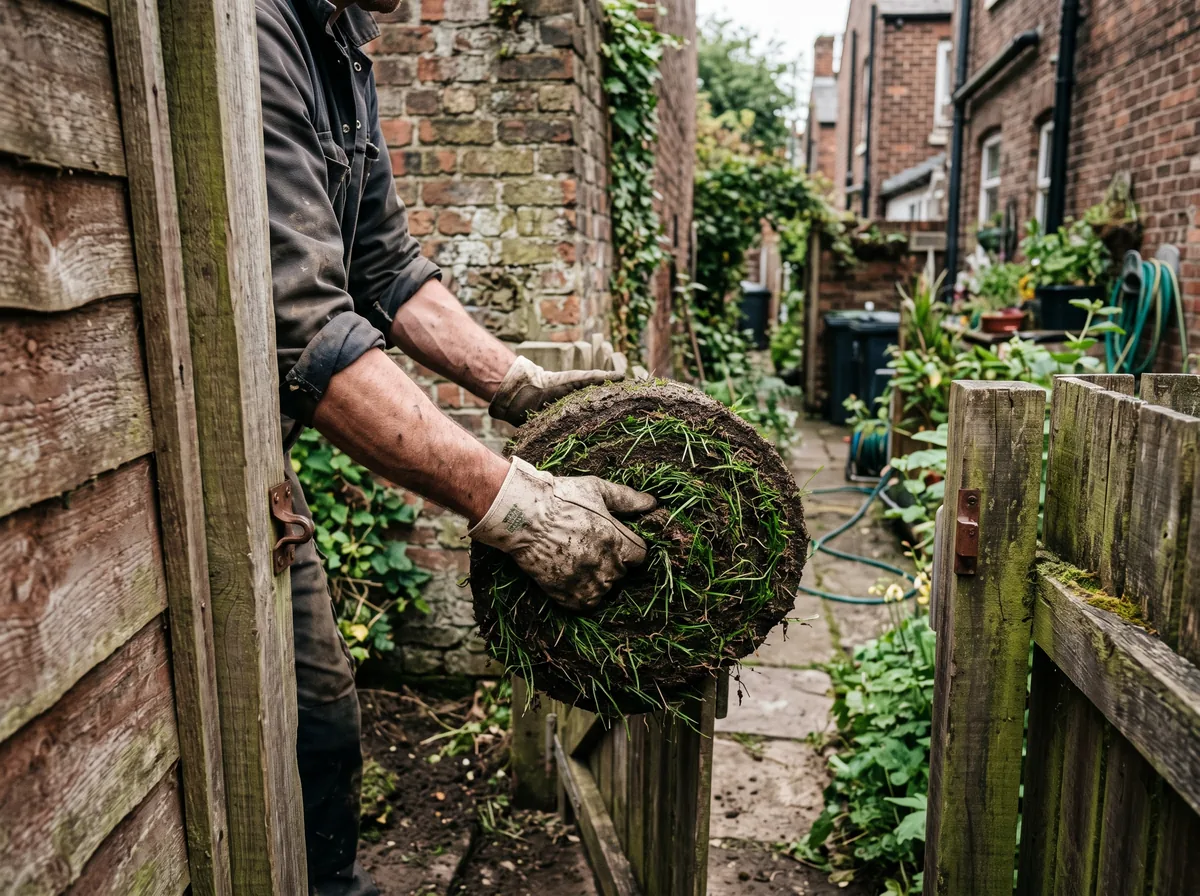
The first hurdle shows up before a single roll is laid. Sod is heavy, roughly 15 to 18 kilograms per roll when fresh, and a backyard lawn can need dozens of them plus soil and equipment. On a downtown semi or an East York row, there is often no driveway, no lane, and only a narrow side gate between the street and the yard. Every pallet has to be broken down and hauled by hand, sometimes through the house or over a fence.
Access shapes the whole project. It affects how quickly sod can be installed, which matters because turf is perishable and should go down within a day of delivery. It also affects soil prep, since bringing in fresh topsoil or removing old sod by wheelbarrow is slow work. The fix is planning: measuring gate widths, mapping the shortest route, and staging deliveries so the sod is not sitting on a hot sidewalk losing quality while a crew shuttles it roll by roll.
Pro tip
Measure your narrowest access point before you order anything. A standard wheelbarrow needs about 30 inches of clearance. If your gate is tighter, flag it early so the crew brings narrower carts or plans a through-the-house route with floor protection, rather than discovering the problem on delivery day.
Challenge 2: Shade from trees and buildings
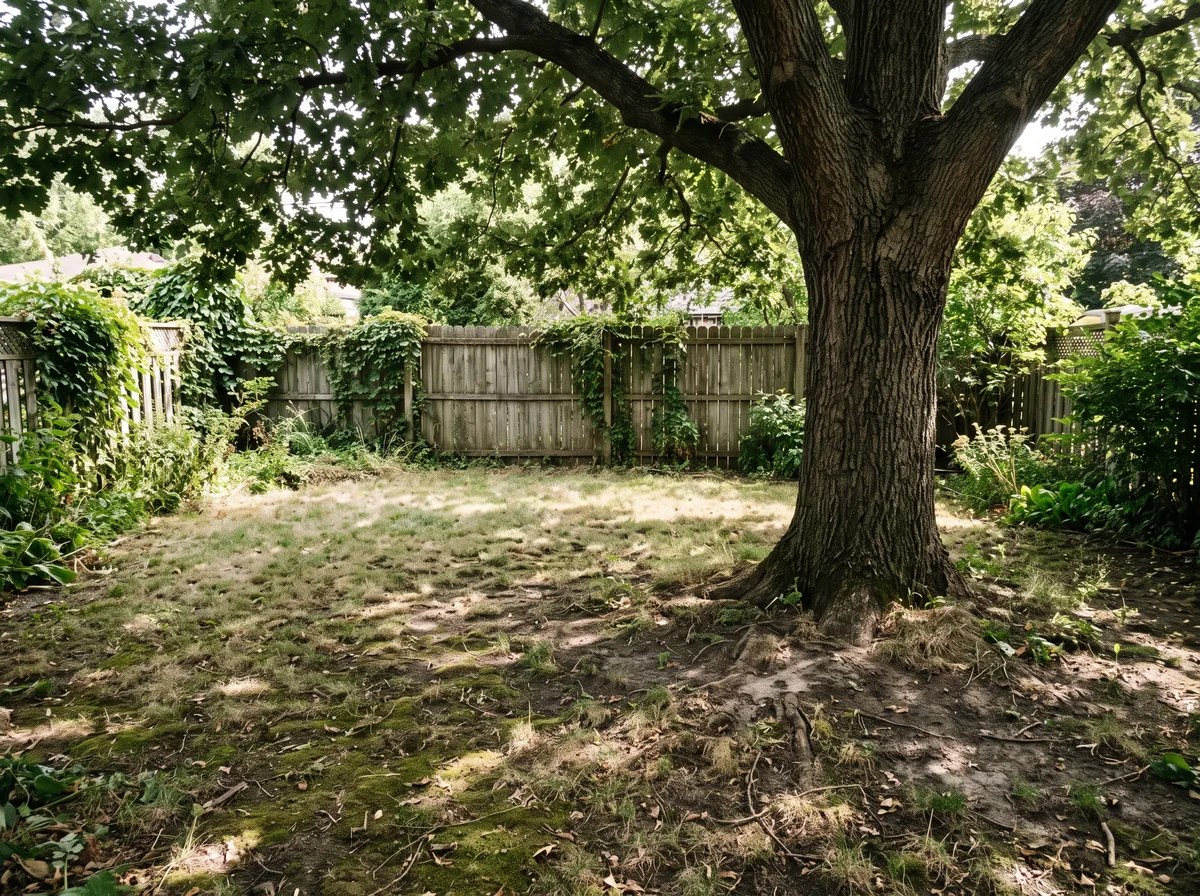
Shade is the quiet killer of city lawns. A mature silver maple or Norway maple, the kind that lines so many older Toronto streets, can cast dense shade and drink up soil moisture with a hungry surface root system. Add a two-storey neighbour to the south and a fence line, and parts of the yard may see only two or three hours of direct sun a day. Most standard lawn blends want far more than that.
The answer is matching the grass to the light, not fighting it. Shade-tolerant species like fine fescues handle low light far better than sun-loving Kentucky bluegrass, and a good installer will spec a blend suited to the yard rather than a one-size roll. For the science on how turf actually copes with shade, the Guelph Turfgrass Institute at the University of Guelph is a solid Ontario reference. Thinning the tree canopy to let dappled light through and raising your mowing height both help the grass make the most of what light it gets.
Did you know
Grass in shade is not just fighting for light, it is competing with tree roots for water and nutrients too. That is why a shaded lawn under a big maple often needs more careful watering and feeding than a sunny one, even though it gets less direct sun and less evaporation.
Challenge 3: Compacted soil and poor drainage
Dig down in a Toronto backyard and you often find the third challenge: soil that has been compacted by decades of foot traffic, old construction, and heavy clay to begin with. Compacted soil sheds water instead of absorbing it, starves roots of air, and leaves new sod sitting on a hard pan it cannot penetrate. Renovations and additions make it worse, burying rubble and subsoil where topsoil should be.
Drainage problems usually trace back to the same source. Water pools in low spots, runs off compacted clay, or collects against foundations in tight lots with nowhere to go. Laying sod over that without fixing the base is how people end up with soggy patches and thin grass a year later. The fix is real soil prep: loosening or replacing the top layer, grading so water runs away from the house, and adding quality topsoil so roots have something to grow into. It is the least glamorous part of the job and the one that decides whether the lawn survives.
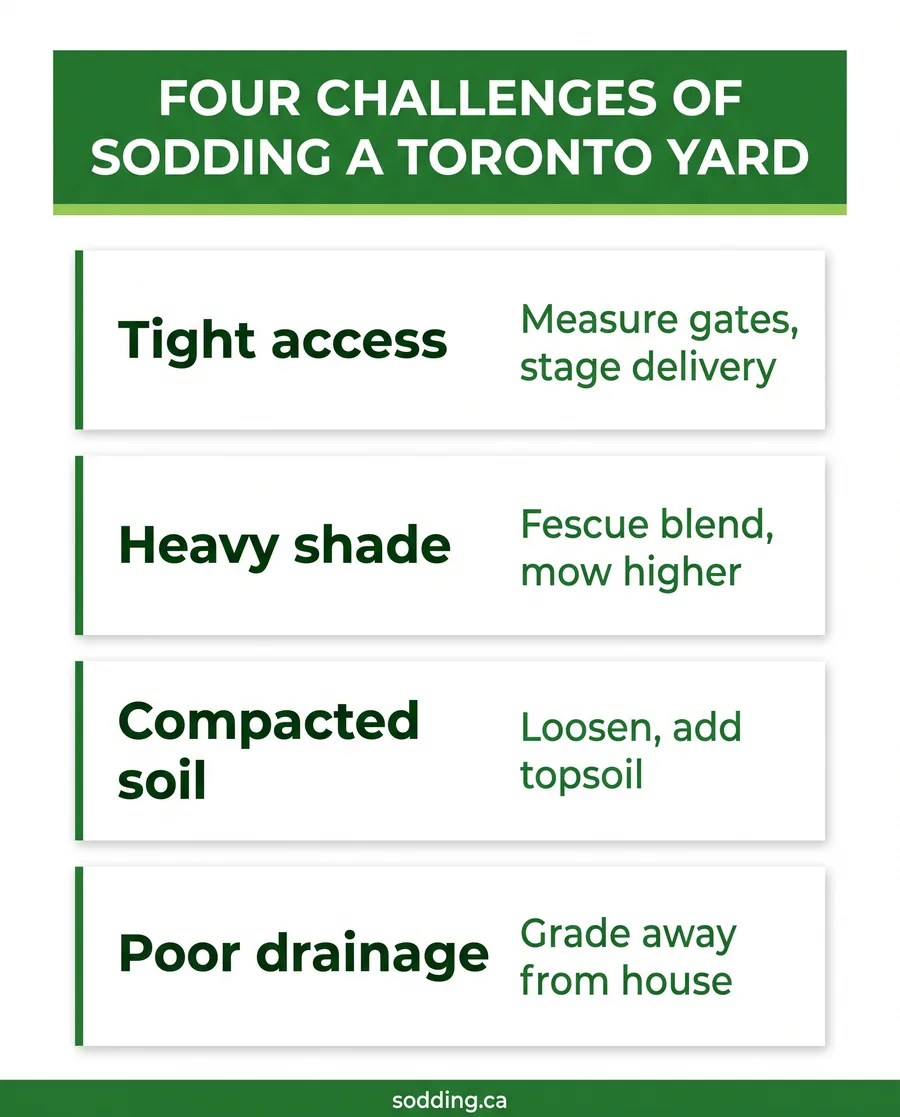
| Urban challenge | Why it hurts new sod | The practical fix |
|---|---|---|
| Tight access | Slow install, turf loses quality waiting | Measure gates, stage delivery, use narrow carts |
| Heavy shade | Standard grass thins and dies out | Shade-tolerant fescue blend, thin canopy, mow higher |
| Compacted soil | Roots cannot penetrate, water runs off | Loosen or replace topsoil, add quality soil |
| Poor drainage | Soggy patches, disease, thin grass | Grade away from the house, fix low spots first |
Save the redo
Skimping on soil prep is the most expensive corner to cut. Sod laid on a poorly drained, compacted base can fail within a season, and replacing it costs far more than doing the grading and topsoil right the first time. On a small urban lot the prep is a big share of the value.
Choosing the right sod for a Toronto yard
Once access and soil are handled, the sod blend itself is what carries a lawn through the seasons. There is no single best turf for the city, because the right choice depends on how much sun the yard actually gets and how the space is used. A sunny front strip, a shaded back corner, and a lawn that doubles as a play area each point to a slightly different blend. A good installer walks the yard, reads the light, and matches the turf to the conditions rather than selling one roll for everything.
As a rough guide, sunny open areas do well with a durable Kentucky bluegrass mix, deep-shade corners need a fescue-heavy blend, and high-traffic family lawns benefit from a hard-wearing mix that recovers from wear. Matching blend to spot is the difference between a lawn that fills in and one that thins out under the same tree every August.
Red flag: The wrong roll for the spot
A sun-loving blend laid in deep shade will look great for a few weeks and then thin out no matter how well you care for it. If a supplier offers you one generic sod for a yard that has both a bright front and a shaded back, that is a warning sign. Different light means different turf.
How to set an urban lawn up for success
The steps below are general guidance for planning an urban sod project. Every Toronto lot is different, and results vary with soil, climate, and maintenance. Confirm the right approach for your specific lawn, follow product label instructions, and check local rules before major grading or tree work. Sodding Canada is not responsible for outcomes from work attempted based on this article.
- Assess the site. Note how many hours of direct sun each area gets, where water pools, and how heavy the soil feels.
- Measure access. Check gate widths and the route from street to yard so delivery and prep can be planned realistically.
- Fix the base first. Loosen or replace compacted topsoil, correct low spots, and grade so water drains away from the house.
- Match the sod to the light. Choose a shade-tolerant blend for dim corners and a durable sun blend for open areas.
- Lay fresh, water fast. Install turf within a day of delivery and soak it thoroughly to start the roots.
- Baby it while it roots. Keep traffic light for two to three weeks, water consistently, and mow high once established.
Pro tip
Time the project for spring or early fall. Toronto’s cool, moist shoulder seasons let sod root before summer heat or winter cold stresses it, which matters even more in a shaded, moisture-competing urban yard than in an open suburban one.
“Our downtown backyard is mostly shade and clay. The first lawn failed because it was the wrong grass. The redo with a fescue blend and proper soil prep has held up for three years.”
Toronto homeowner
Download the free quick guide
A one-page planning checklist for the access, shade, soil, and drainage issues that make city lawns tricky.
Frequently Asked Questions
Dealing with a shaded, tight, or stubborn city lot? Sodding Canada handles the parts that make urban lawns hard, from hauling turf through narrow access to fixing compacted soil and choosing a blend that suits the light, across Scarborough, North York, Etobicoke, and the rest of Toronto. Reach out for a free assessment and we will tell you honestly what your yard needs before any sod goes down.