Last updated:
Lawn weeds in the Greater Toronto Area are a persistent challenge because our climate supports an exceptionally wide variety of them. Ontario’s combination of cold winters, warm summers, acidic rainfall, and heavy clay soils in many GTA municipalities creates conditions where broadleaf weeds, grassy weeds, and sedges all find footholds in residential lawns.
Identifying what you are dealing with is the first step to controlling it – because different weeds require different approaches, and treating a crabgrass infestation with a broadleaf herbicide will accomplish nothing.
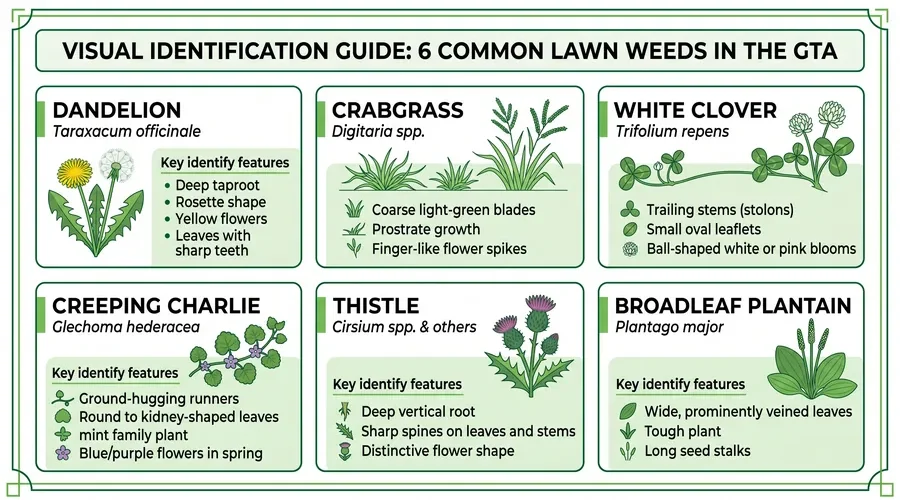
This guide identifies the eight most common lawn weeds in the GTA and explains the best control approach for each. For professional weed control and lawn care services, our team serves the GTA and surrounding areas.
1. Dandelion (Taraxacum officinale)
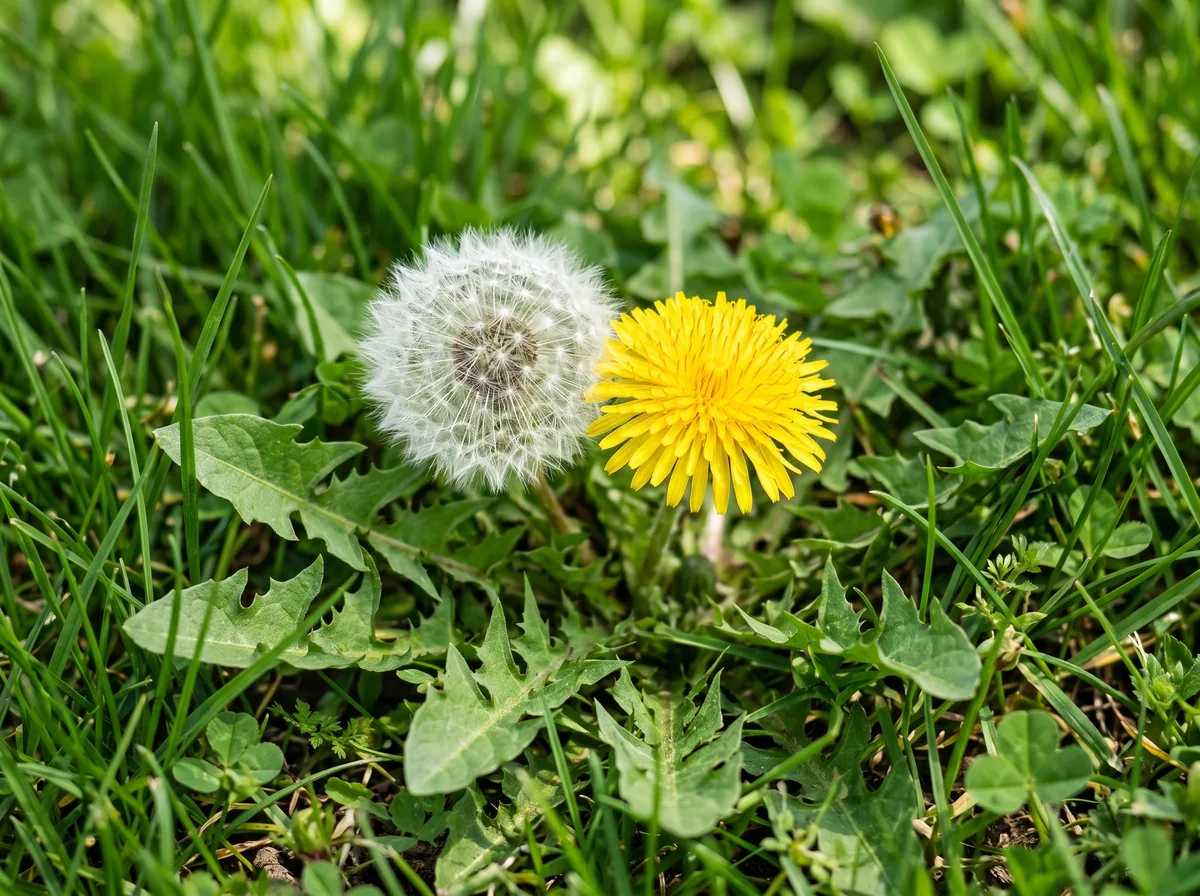
The most recognizable lawn weed in Ontario. Dandelions have a deep taproot that can extend 30 cm or more into the soil, making hand-pulling effective only when the entire root is removed. Identification: bright yellow composite flower heads on hollow stems, deeply toothed leaves in a rosette pattern at ground level. Seeds spread by wind on characteristic white puffball seed heads.
Control: Hand-pulling after rain when soil is soft removes the taproot cleanly. For large infestations, broadleaf herbicides containing 2,4-D or triclopyr are effective but are restricted to licensed applicators in Ontario under the Cosmetic Pesticides Act. A healthy, dense lawn is the best long-term prevention – dandelions establish most readily in thin, compacted, or nutrient-deficient turf.
2. Crabgrass (Digitaria spp.)
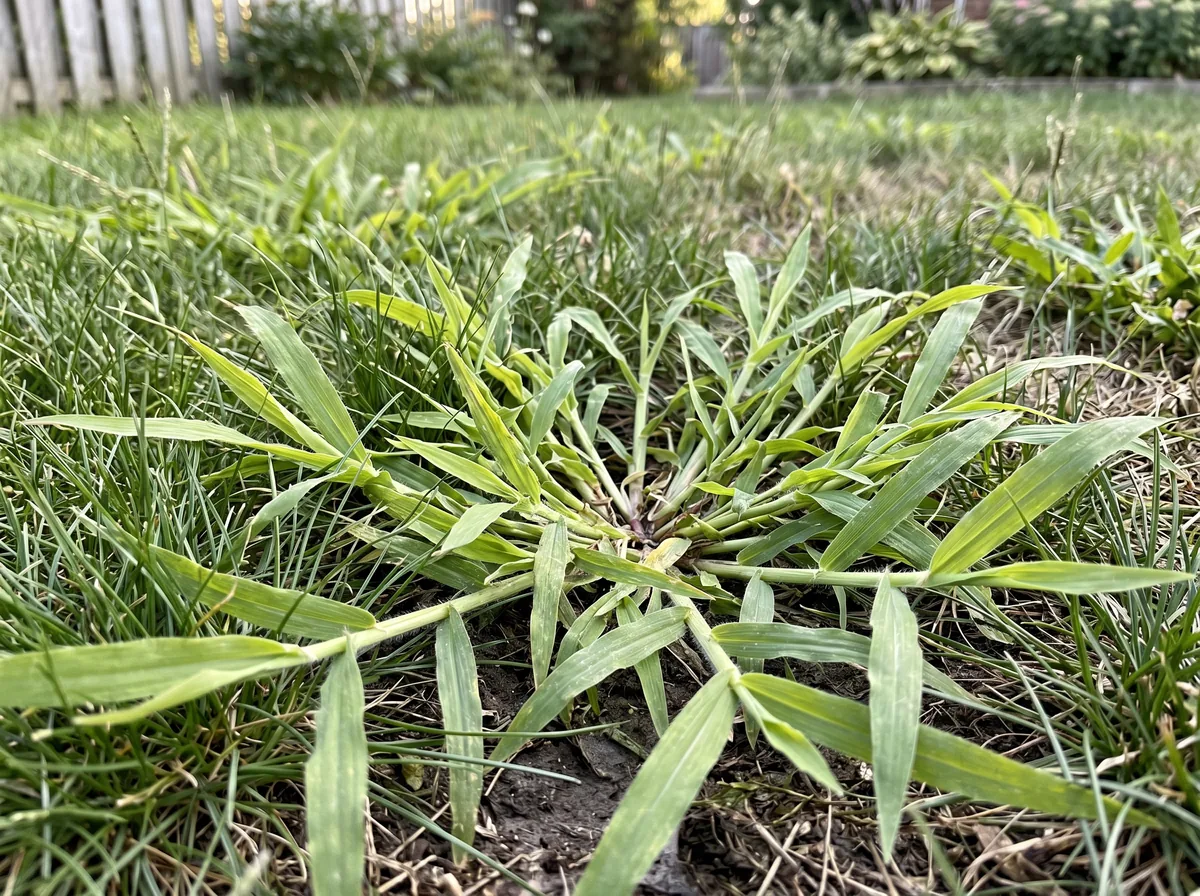
An annual grassy weed that germinates from seed each spring when soil temperatures reach approximately 13 degrees Celsius, which typically occurs in the GTA between late April and mid-May. Identification: low-growing, spreading grass with wider blades than Kentucky bluegrass or fescue, with finger-like seed heads from mid-summer. Crabgrass dies with the first frost but leaves bare patches where it grew.
Control: Pre-emergent herbicides applied before soil reaches the germination threshold (around May 1 in the GTA) are the most effective control method. Post-emergent control is more difficult. Dense turfgrass shades the soil and reduces crabgrass germination – overseeding thin areas reduces future pressure significantly.
3. Creeping Charlie / Ground Ivy (Glechoma hederacea)
One of the most aggressive and difficult-to-control weeds in GTA lawns. Identification: round to kidney-shaped scallop-edged leaves, square stems (a mint family characteristic), small purple flowers in spring, distinctive minty-earthy smell when crushed. It spreads by creeping stems (stolons) that root at each node.
Control: Creeping Charlie is challenging because it roots along its entire length. Hand-removal must capture all stolons. It tolerates shade better than most lawn grasses, making it particularly problematic under trees. Broadleaf herbicides with triclopyr are the most effective chemical control; multiple applications in fall are generally more effective than spring treatments.
4. White Clover (Trifolium repens)
White clover is a nitrogen-fixing legume that some gardeners intentionally include in lawns, but it spreads aggressively and outcompetes turfgrass in GTA lawns with low soil nitrogen. Identification: three-part rounded leaflets often with a lighter chevron marking, white spherical flower heads.
Control: Adequate lawn fertilization is the primary prevention – clover thrives in nitrogen-deficient lawns because it creates its own nitrogen supply. Broadleaf herbicides are effective for elimination. Many GTA homeowners choose to tolerate low levels of clover for its pollinator benefit and nitrogen contribution.
5. Broadleaf Plantain (Plantago major)
Very common in compacted, high-traffic GTA lawns. Identification: broad, oval, heavily-ribbed leaves with prominent parallel veins and long petioles, growing in a flat rosette. Narrow greenish flower spikes rise from the center. Plantain is an indicator of compaction.
Control: Core aeration to relieve compaction addresses the root cause. Hand-pulling is effective when roots are relatively shallow. Broadleaf herbicides are effective. Preventing re-establishment through overseeding and aeration reduces recurrence.
6. Common Thistle (Cirsium vulgare)
Less common than the weeds above but highly competitive once established. Identification: deeply lobed leaves with sharp spines on the margins and leaf tips, purple flower heads. Can reach 1 meter in height if not cut.
Control: Wear gloves. Remove before flowering to prevent seed spread. The taproot must be removed entirely to prevent regrowth. Broadleaf herbicides are effective for large infestations.
7. Spurge (Euphorbia maculata)
A summer annual that forms dense, low-growing mats in hot, dry, compacted areas. Identification: small oval leaves with a reddish centre spot, milky sap when broken (wash hands immediately – sap can irritate skin), spreading stems that radiate from a central taproot. Common in driveway edges, thin turf, and any area with poor soil.
Control: Pull while young before seed set. Mulch in garden borders prevents emergence. Improved soil conditions and dense turf coverage reduces pressure significantly.
8. Yellow Nutsedge (Cyperus esculentus)
Nutsedge is a sedge (not a true grass) that grows faster than most lawn grasses and stands noticeably taller after mowing. Identification: shiny, yellow-green leaves with a distinct V-shaped cross-section (use the “triangle” test – a true grass has a round or flat stem, nutsedge has three sides), triangular stem. Spreads by underground tubers (“nutlets”) that can remain viable in soil for years.
Control: This is one of the most difficult weeds to eradicate. Improving drainage reduces pressure since nutsedge thrives in wet areas. Sedge-specific herbicides (not standard broadleaf herbicides) are needed for chemical control. Mechanical removal of nutlets is labour-intensive but effective in small areas.
Need Professional Lawn Weed Control in the GTA?
For persistent weed problems or large-scale infestations, our certified lawn care team provides professional lawn care and weed control services across the Greater Toronto Area. We assess your specific weed pressure, soil conditions, and lawn density to recommend the most effective approach. Contact us for a free assessment.
Frequently Asked Questions
Thinking about replacing the lawn instead? A weed problem this far along is usually a soil problem underneath. Once weeds outnumber grass, herbicide leaves you with bare ground and the same compacted base. Full replacement fixes both at once. See what a sod installation includes, what sodding costs, and how we work on sodding in Brampton lawns.