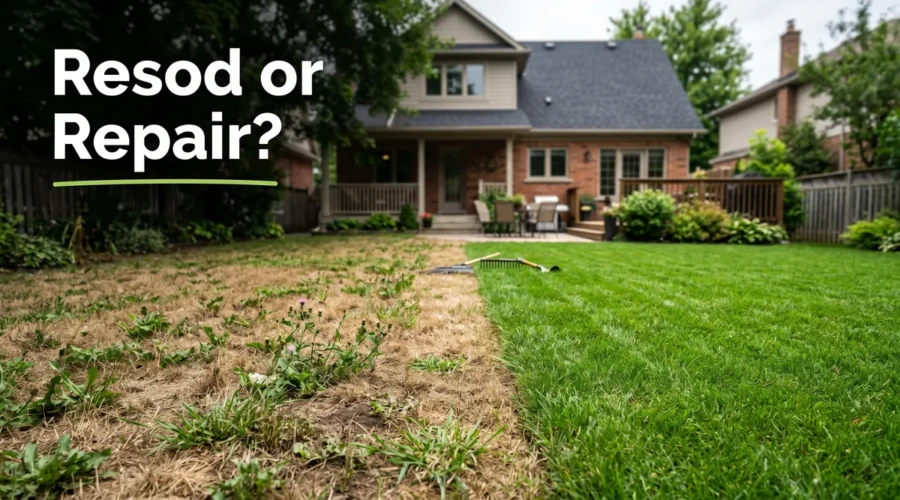
The clearest signs your lawn needs resodding rather than a patch job are simple: more than about half the yard is dead or weeds, the grass keeps dying in the same spots no matter what you do, or the soil underneath has gone hard, lumpy, or waterlogged. Spot damage you can repair. A lawn that fails across the board usually needs a fresh start. If you would rather have someone read your yard for you, our team handles professional sod installation across the GTA and starts every job with an honest assessment.
Resodding is more work and more money than a few repairs, so it is worth knowing which camp your lawn falls in before you spend either. This guide walks through the signals a lawn pro looks for, the rough 50 percent rule that settles most cases, and the questions to ask before you tear anything out.
Repair or Resod: What is the Difference
Lawn repair means fixing the parts that are damaged while keeping most of the existing lawn. That can be patching bare spots with a piece of fresh sod, overseeding thin areas, topdressing, or treating a localized problem like a small disease patch. It is fast, cheap, and right when the bones of the lawn are still good.
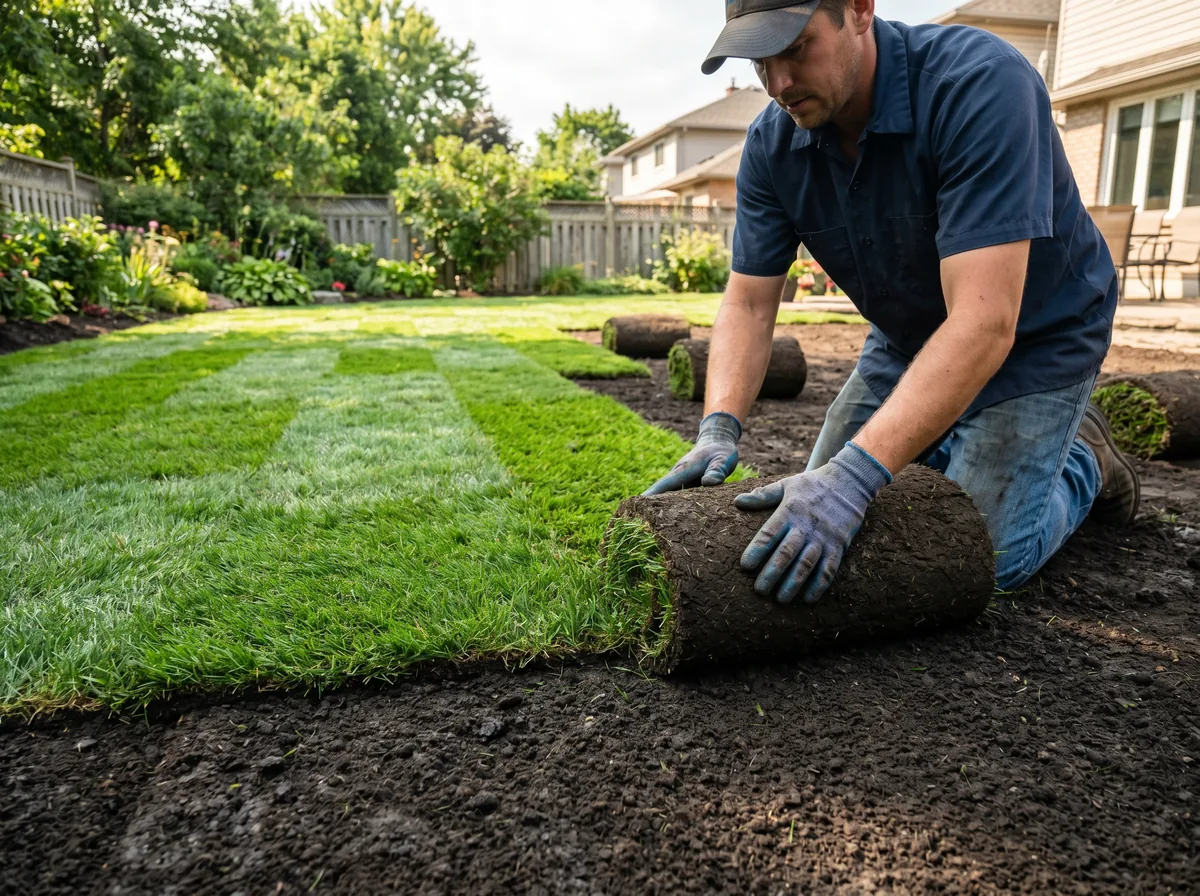
Resodding means removing the old lawn and laying fresh sod over properly prepared soil. It is the reset button. You choose it when the existing turf is too far gone to rescue, or when the ground underneath is the real problem and no amount of surface work will fix it. The trick is telling those two situations apart, which is what the rest of this guide is for. If you want a refresher on the broader case for starting over, our piece on the benefits of professional lawn replacement covers it in depth.
The 50 per cent Rule That Settles Most Lawns
Did you know: the rough 50 per cent guideline
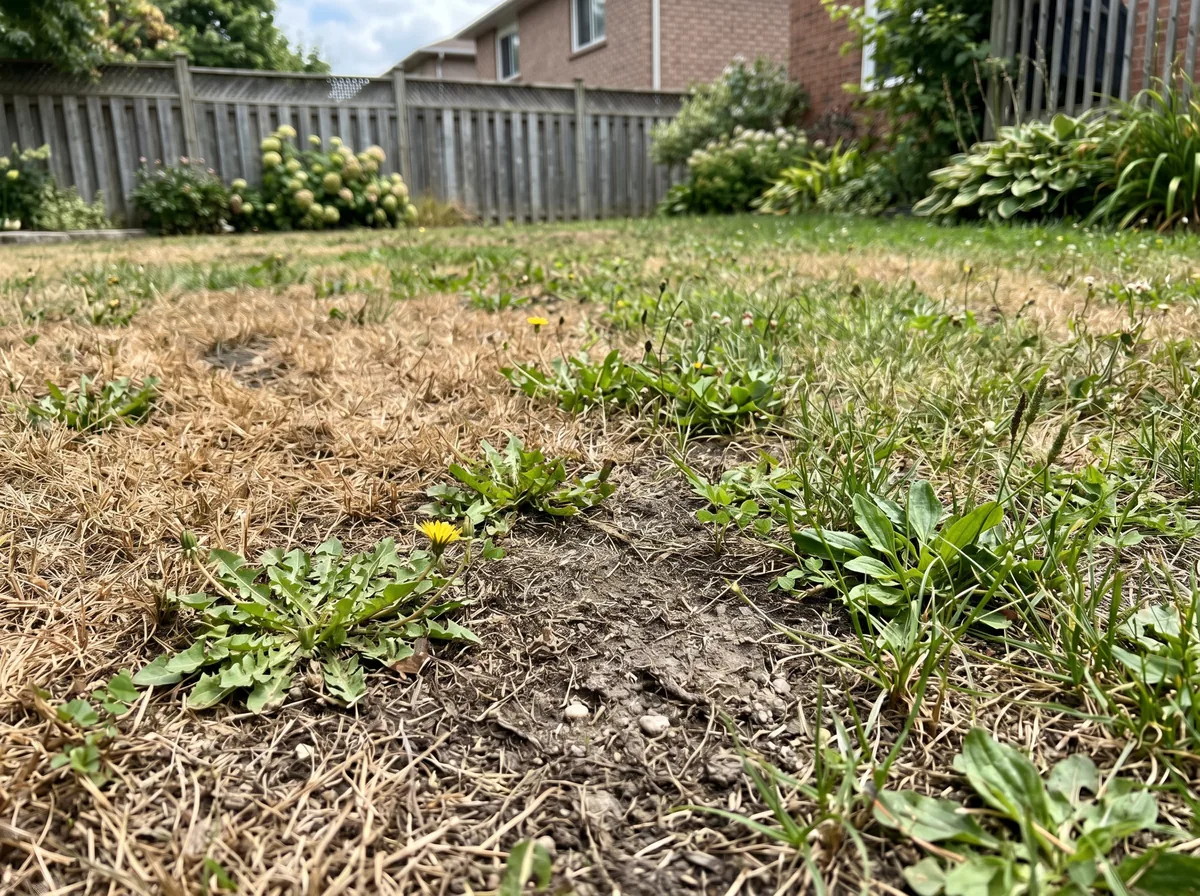
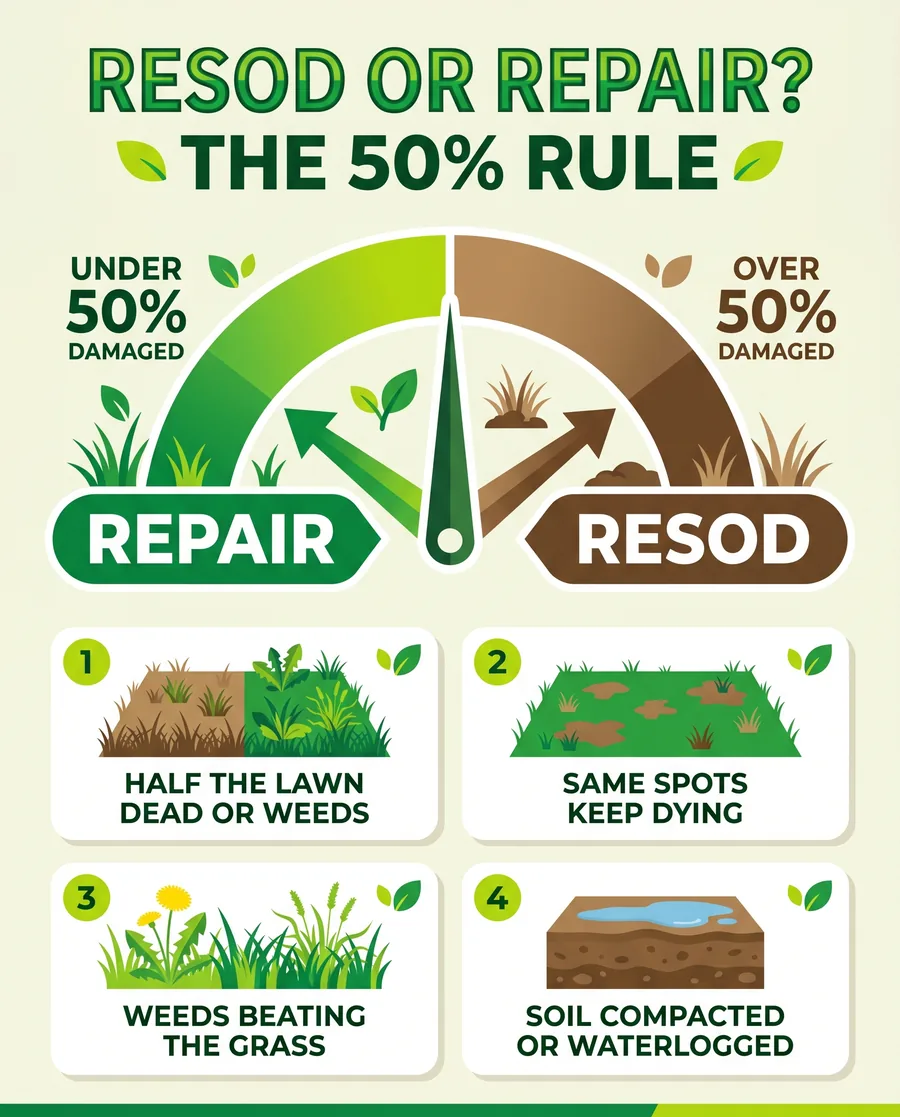
A common rule of thumb among lawn pros is the 50 percent test. Stand back and look at the whole yard. If more than roughly half of it is dead, bare, or taken over by weeds and moss, repairs become a losing battle, and resodding is usually the more cost effective fix. Below about half, targeted repair and overseeding can bring the lawn back. It is a guideline, not a law, but it settles the easy cases fast.
The reason the rule works is effort versus payoff. Patching one or two bad spots is quick. Patching forty scattered spots, then nursing them while weeds fill every gap, takes a full season and often fails anyway. Past a certain point, clearing the lawn and laying fresh sod is both faster and more reliable. The next sections help you judge which side of the line you are on.
Five Signs You Need to Resod
Please note: The tips here are for general guidance only. Sodding Canada is not responsible for any damage, cost, or loss resulting from action taken based on this content. Every lawn is different; soil, drainage, sun, and existing grass health all change what the right fix is. If a step involves grading, heavy removal, drainage changes, or treating a problem you cannot confidently identify, have your yard assessed in person or call a licensed lawn-care professional first.
- More than half the lawn is dead or weeds. This is the 50 percent rule in action. When weeds, moss, and bare soil cover most of the yard, the healthy grass left over is not enough to spread and recover.
- The same spots die every year. If an area browns out, you repair it, and it dies again next season, the surface is not the problem. Compacted soil, poor drainage, or heavy shade keeps killing the grass, and fresh sod laid over fixed soil is the only lasting answer.
- The lawn is more weeds than grass. Once weeds win, they keep winning. They outcompete thin turf for water and light, and herbicides alone leave you with bare dirt where the weeds were. A clean reset with new sod gives grass the head start it needs.
- Heavy thatch or spongy, uneven ground. A thick thatch layer or a lumpy, hollow-feeling surface means the lawn is not rooting into real soil. Repairs sit on top of the problem instead of solving it.
- Years of decline despite good care. If you water, mow, and feed correctly and the lawn still thins out year over year, the underlying lawn has aged out. Old, exhausted turf eventually needs replacing the same way a worn-out carpet does.
People often ask: Can I just keep patching instead of resodding?
You can for a while, but there is a tipping point. Patching makes sense when the damage is contained and the rest of the lawn is healthy enough to knit the repairs in. Once the damage is widespread, or the same areas keep failing, patching turns into a yearly chore that never quite works. At that stage the money and weekends you spend on repairs would have been better put toward resodding once and being done. The honest test is whether last year’s repairs are still alive today.
When a Repair is the Smarter Call
Resodding is not always the answer, and a good installer will tell you when you do not need it. A repair is usually the right move when the damage is the exception rather than the rule.
- A few isolated dead or brown patches. One pet spot, a single drought-stressed area, or a small patch from a spill can be cut out and replaced. Our guide on how to repair dead or brown patches in sod walks through it.
- Thin areas that still have living grass. If the crowns are alive, overseeding and proper feeding can thicken the lawn without a full replacement.
- A lawn that is mostly healthy. If clearly more than half the yard is green and rooted, you are in repair territory, not resodding territory.
- Temporary stress with a known cause. Grass that browned during a heat wave or a watering ban can often bounce back. Before giving up, try our steps for reviving dead grass.
Check What is Under the Grass First
Before you decide anything, look below the surface. The single most common reason a lawn keeps failing is the soil, not the grass. Push a screwdriver into the ground. If it stops dead a couple of centimetres down, the soil is compacted and roots cannot get established. Dig a small test hole after a rain. If water sits in it for hours, you have a drainage problem that new sod alone will not fix.
Pro tip: fix the soil during a resod, not after
The best time to solve compaction, grading, and drainage is while the old lawn is off and the soil is exposed. A proper resod includes loosening and amending the soil, correcting the grade so water flows away from the house, and giving the new roots real ground to grow into. Skipping that step is why so many DIY lawns fail again within a year. If the soil is the issue, resodding is not just cosmetic, it is the repair.
Not sure what you are looking at? Our walkthrough on lawn assessment and problem identification helps you read the symptoms, and from there you can weigh the full lawn preparation steps for sodding against a simpler patch.
Download the free quick guide
Take our printable checklist into the yard and tick off each sign to settle whether you should repair or resod.
What Resodding Tends to Cost in 2026
Pricing note: The figures on this page reflect typical market rates in the GTA and York Region as of 2026. What you actually pay depends on your yard size, site access, how much old lawn has to come out, soil and grading work, and the grass variety you choose. Always get a written quote or an in-person assessment before committing to a sod or lawn project.
Cost is part of the decision, so it helps to compare the two paths side by side. The ranges below are typical starting points in the GTA, not firm quotes, and they shift with yard size, access, and how much prep the soil needs.
| Approach | Typical GTA range (2026) | Best when |
|---|---|---|
| Spot repair / patching | $100 to $500 (DIY) | A few isolated dead spots, healthy lawn overall |
| Overseeding a thin lawn | $300 to $900 | Living but thin grass, no soil problems |
| Partial resod (problem zones) | $1,000 to $3,000 | One large failed area, rest of lawn fine |
| Full professional resod | $2,500 to $8,000+ | Most of the lawn failed, soil or grading issues |
Resodding costs more up front, but a patch-and-pray cycle that fails every year can cost more over time and still leave you with a poor lawn. For a fuller breakdown, see our 2026 Ontario sodding cost guide, and if you are still torn between starting fresh or seeding, our sod versus seed comparison lays out the trade-offs.
Sources and further reading
- Sodding Canada, in-house GTA lawn assessment and 2026 regional pricing observations.
- This Old House, “How to Patch a Lawn” (video, embedded above), general lawn repair guidance.
- Industry rule-of-thumb on lawn renovation thresholds (the 50 percent guideline), widely used by turf professionals.
The Verdict
Run the simple test. If clearly more than half your lawn is healthy and the bad spots are few and explainable, repair it. If most of the yard is dead or weeds, the same areas keep failing, or the soil underneath is the real problem, resodding will save you money and frustration in the long run.
- Walk the whole yard and estimate the healthy percentage honestly.
- Push a screwdriver into the soil and dig a test hole to check compaction and drainage.
- If you are over the 50 percent line or fighting the same spots yearly, plan a resod and fix the soil while it is open.
Not Sure Whether Your Lawn Needs Repair or a Full Resod?
We have read thousands of lawns across the GTA and York Region, and we will tell you straight which one yours needs. Book a service or contact our team for a clear assessment and quote. No upsell, just an honest plan for a lawn that lasts.
Frequently asked questions
How much of my lawn has to be dead before I should resod?
A widely used guideline is the 50 percent rule. If more than roughly half of the lawn is dead, bare, or overrun by weeds and moss, resodding is usually more cost effective than trying to repair it piece by piece. Below that, targeted repairs and overseeding can bring the lawn back. The reason is simple: once damage passes about half the yard, there is not enough healthy grass left to spread and fill the gaps, and weeds move into every opening faster than you can patch. Walk the whole yard before you judge, since damage often looks worse from one angle.
Why does the same spot in my lawn keep dying after I repair it?
When a spot dies, you fix it, and it dies again, the surface is not the real problem. The usual culprits are compacted soil that roots cannot penetrate, poor drainage that drowns the grass, or heavy shade that starves it of light. Fresh seed or sod laid over an unsolved problem just fails the same way. The fix is to address the cause: loosen and amend the soil, correct the grade so water drains away, or choose a shade-tolerant grass. That kind of soil work is easiest to do during a full resod, which is why repeat failures often point toward resodding.
Is resodding worth it compared with just repairing every year?
It often is, once you add up the real cost of repeated repairs. Patching a few spots is cheap and quick, so for an otherwise healthy lawn, repair wins. But if you are reseeding, watering, and weeding the same failing lawn every spring and still ending up disappointed, those weekends and bags of seed add up while the lawn never truly recovers. A proper resod fixes the soil and gives you an established lawn in one season. Think of it the way you would a roof: endless small patches eventually cost more than doing it right once.
What is the best time of year to resod a lawn in Ontario?
In Ontario, the strongest windows for new sod are spring, from roughly late April through June, and early fall, from late August into September. Both seasons offer cooler temperatures and reliable moisture, which let new sod root before heat or hard frost arrives. Summer sodding is possible but demands much heavier watering to keep the sod from drying out. Avoid laying sod once the ground starts to freeze. If you are planning around the calendar, aim to schedule the work so the new lawn has several weeks of mild weather to establish.