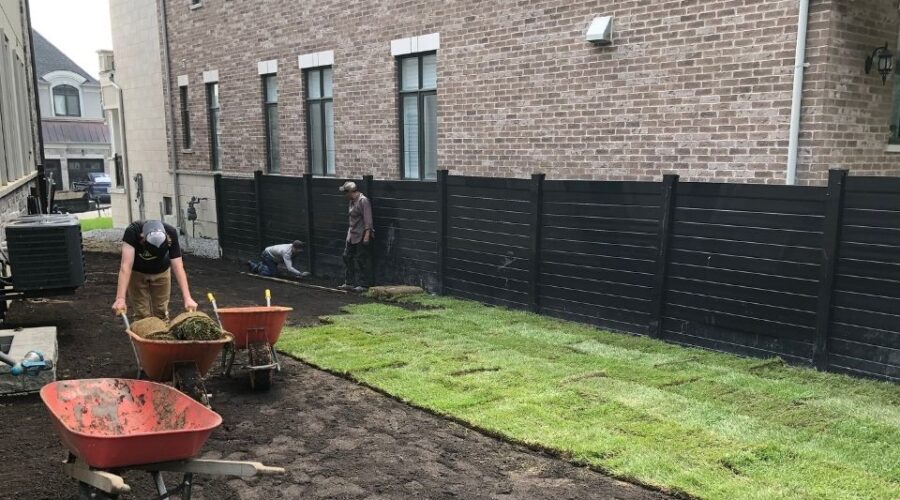
For most Ontario lawns the answer is a Kentucky bluegrass blend, usually cut with perennial ryegrass so it fills in faster. If your yard is shaded for most of the day, swap to a fine fescue blend. If it takes a beating from kids, dogs or full afternoon sun, tall fescue holds up better than anything else on this list. Everything below is the reasoning behind those three answers.
Grass Types for Ontario Lawns, Compared
| Grass type | Best for | Sun or shade | Notes |
|---|---|---|---|
| Kentucky bluegrass | Classic GTA lawns | Full sun | The most common grass in Ontario sod. Spreads by underground rhizomes, so it repairs its own thin spots and knits at the seams. Slow to germinate from seed. |
| Tall fescue | Drought and wear tolerance | Sun to part shade | Deep roots, handles heat and foot traffic. Coarser blade than bluegrass, so it looks slightly rougher up close. |
| Fine fescue | Shady areas | Shade | The best shade tolerance of the group and low maintenance. Does not take heavy traffic well. |
| Perennial ryegrass | Fast germination | Sun | Up in days rather than weeks, which is why it is almost always blended in. On its own it clumps and thins out over a few winters. |
Why Ontario Only Grows Cool-Season Grass
Ontario sits firmly in cool-season territory. Every grass in the table above does its growing in spring and fall, slows down in the heat of July and August, and goes dormant under snow. Warm-season grasses you see advertised for the southern United States, like bermuda or zoysia, will not survive an Ontario winter. If a seed bag mentions either, it is the wrong bag.
That also explains the seeding calendar. Late August through September is the best window, because the soil is still warm, the air has cooled and the weed pressure has dropped off. Spring is second best. Midsummer seeding mostly feeds the birds.
Sun vs Shade: Pick by the Light You Actually Have
Six or more hours of direct sun
A Kentucky bluegrass blend, usually around 80 to 90 percent bluegrass with ryegrass making up the rest. This is what most Ontario sod farms grow and what most GTA lawns are. It gives you the dense, deep green, uniform look people picture when they say lawn.
Four to six hours of sun, or dappled light
A bluegrass and fescue mix. Tall fescue carries the shadier half of the yard and the bluegrass keeps the look consistent. This is the realistic choice for most older Toronto and North York lots, where mature street trees mean the front and back get very different amounts of light.
Under four hours of sun
A fine fescue blend, and honest expectations. Fine fescue is the most shade-tolerant grass that will grow here, but no grass thrives in deep shade under a dense canopy. Below about three hours of light, thinning out the tree canopy, or switching that area to beds and mulch, beats replanting the same patch every year.
Heavy traffic, kids or dogs
Weight the blend towards tall fescue. Its deeper root system recovers from wear better and handles a dry August without going straw-coloured. The trade-off is a coarser blade, which you notice up close and not from the sidewalk.
Seed or Sod?
Seed is cheaper up front and lets you pick the exact blend. It also takes a full season to look like a lawn, needs constant watering to get there, and gives weeds an open invitation while it establishes. It works best for overseeding a lawn that is already reasonably healthy.
Sod costs more per square foot and gives you a finished lawn the same day, with the blend already grown in on a farm. It is the better choice when the existing lawn is more than about half gone, when the soil needs rebuilding anyway, or when you do not want a construction site for a summer. We break the two down properly in sod vs seed.
Read Next
- Kentucky bluegrass for Ontario lawns – the full guide to the grass most GTA lawns are made of.
- Tall fescue vs fine fescue – which one belongs in your shady half.
- Choosing sod for shade or full sun.
- How to plant grass seed and how to overseed a lawn.
- Best time to lay sod in Ontario.
Would Rather Skip the Season of Waiting?
We install Kentucky bluegrass and fescue-blend sod across the Greater Toronto Area, cut on the farm and laid the same day. See what a full sod installation includes, check what sodding costs per square foot, or book a free on-site quote. You can also see how we work in Toronto, Vaughan and Mississauga.