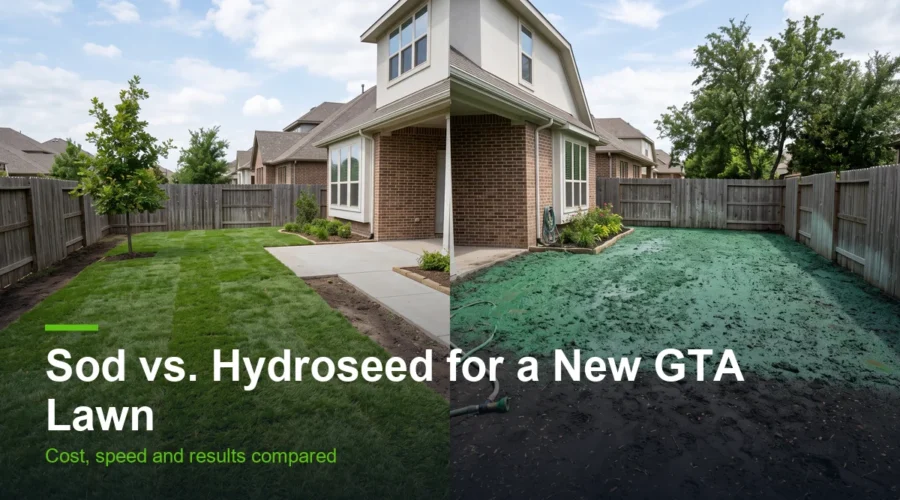
Picture two neighbours starting a new lawn on the same May weekend. One rolls out sod and hosts a barbecue on green grass by June. The other sprays a green slurry and stares at tinted mud for a month. That is the heart of the sod vs. hydroseed decision, and neither neighbour is wrong. The right pick depends on your budget, your timeline, and your yard. Before you book anything, our sod installation across Toronto and the GTA can walk your property with you, and this guide lays out how the two methods really compare.
Quick answer up front. Choose sod when you want an instant, finished lawn, when you have a slope, or when you would rather not fuss over weeks of watering. Choose hydroseed when you have a large, flat area, a tighter budget, and the patience to let a lawn grow in. If you are weighing sod against plain dry grass seed instead, that is a different question we cover in our complete sod vs. seed guide.
What Hydroseeding Actually Is
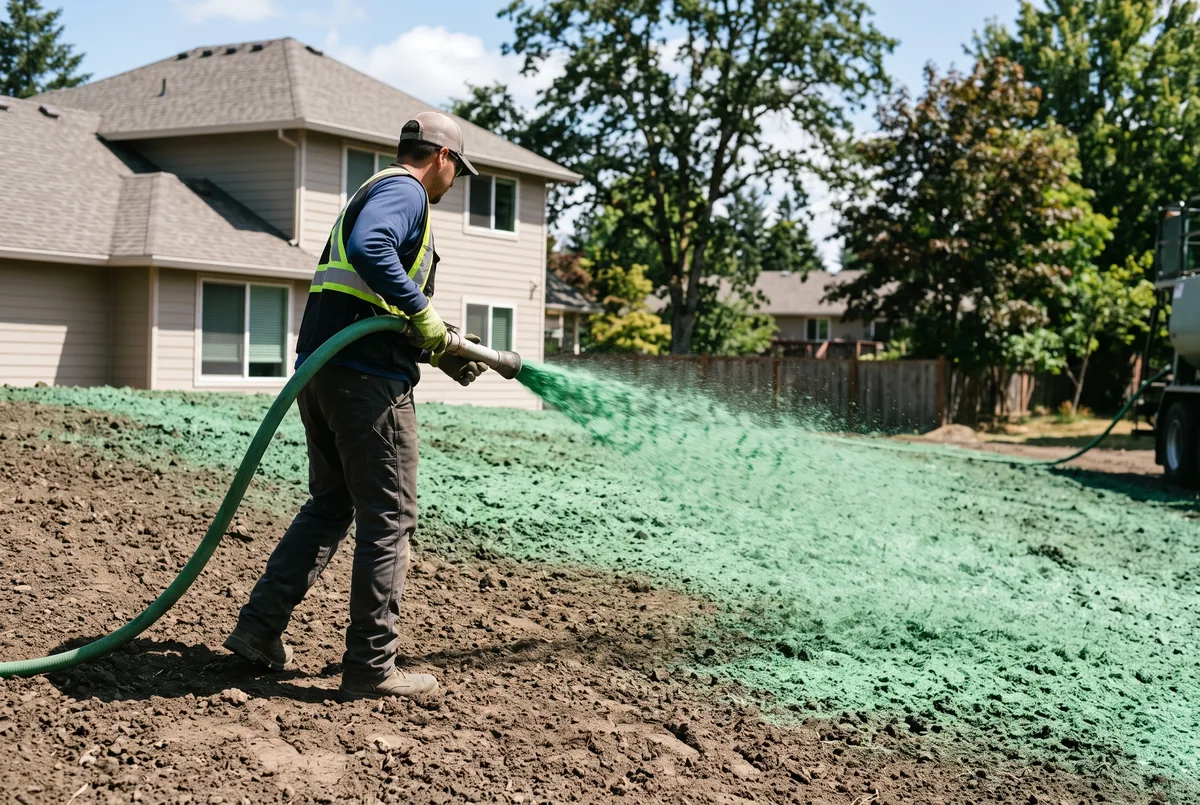
A lot of people hear hydroseed and picture someone flinging grass seed by hand. It is not that. Hydroseeding sprays a wet slurry, a blended mix of grass seed, wood or paper mulch, fertilizer, and a sticky binder called tackifier, out of a tank through a hose onto prepared soil. The green colour you see is the mulch, which is dyed so the crew can see exactly where they have sprayed. You can read a plain-language rundown on the hydroseeding overview if you want the full definition.
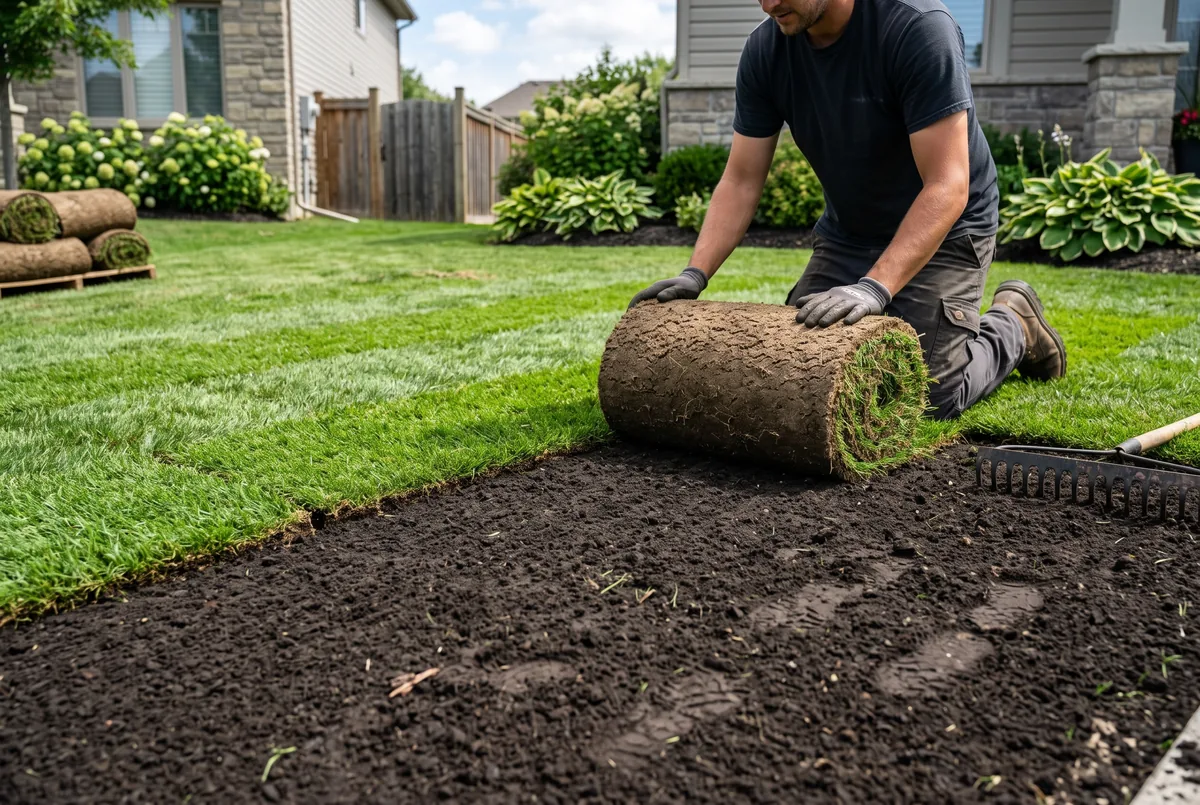
That combination is why hydroseed beats scattering dry seed. The mulch holds moisture against the seed, the fertilizer feeds it, and the tackifier glues everything to the ground so it does not blow or wash away as easily. It is a genuine establishment method that turf specialists treat as a serious way to start a lawn. Sod, by contrast, skips the growing entirely: it is mature grass already grown on a farm, harvested with a thin layer of soil and roots, and unrolled onto your yard like a living carpet.
Did You Know?
The green tint in fresh hydroseed is not the grass. It is dye in the mulch so the crew can spray even coverage. The real grass does not sprout for one to three weeks, and the lawn only looks full after two to three months of growth and watering.
Sod vs. Hydroseed: The Full Comparison
The two methods split cleanly on a handful of factors: what they cost, how long until you have a real lawn, how well they fight erosion, how they handle slopes, and how they look on day one. Here is the head-to-head.
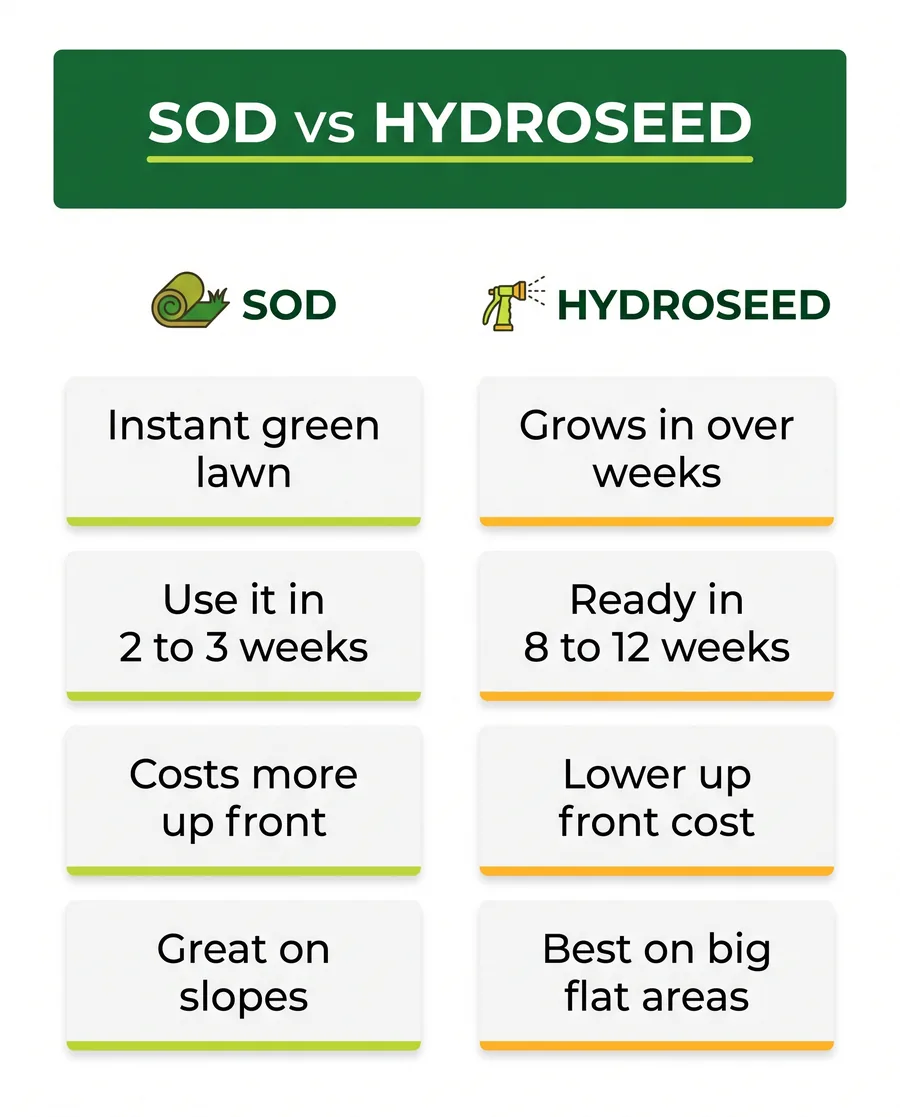
| Factor | Sod | Hydroseed |
|---|---|---|
| Up-front cost | Higher: roughly $1.50 to $2.50 per sq ft installed | Lower: roughly $0.30 to $0.60 per sq ft |
| Time to a usable lawn | Instant green, walk on it in 2 to 3 weeks | Grows in over 8 to 12 weeks before real use |
| Erosion control | Excellent: the mat holds soil the moment it is laid | Good once grown: the mulch tack helps but seed can wash before it roots |
| Slope suitability | Strong on slopes when staked and netted | Weaker on steep grade: heavy rain can wash the slurry |
| Appearance at install | A finished, even, mature-looking lawn day one | Bare green-tinted soil that fills in gradually |
| Grass variety choice | Set by the sod farm blend | You pick the seed mix for sun, shade, or wear |
| Best fit | Small to mid yards, slopes, and anyone who wants it done now | Large flat areas where budget matters more than speed |
People Often Ask: Is Hydroseed Cheaper Than Sod?
Yes, per square foot, hydroseed usually costs a good deal less than sod, which is its biggest draw on large properties. But cheaper up front is not the whole story. Hydroseed needs weeks of careful daily watering and often a second overseeding to fill thin spots, and you cannot use the lawn for a couple of months. Sod costs more, but you get a finished, usable lawn immediately with less babysitting.
Which One Wins for a GTA Yard
Toronto and the wider GTA add a few local wrinkles that tilt the sod vs. hydroseed choice. Our summers can turn hot and dry fast, and a hydroseeded lawn is at its most fragile exactly when the seed is trying to germinate. Miss a few days of watering in a July heat wave and patches simply never come up, which is why hydroseed here really wants a spring or early fall start and an attentive owner.
Sod is far more forgiving of GTA weather because it arrives already rooted and mature, so it shrugs off a hot spell that would kill fresh seed. It also handles our common lot shapes well: smaller urban backyards, front lawns on a grade, and anywhere you want the job finished before a party or a home sale. For the timing side of either choice, our post on the best time to lay sod in Ontario, spring vs. fall is worth a read alongside this one.
Pro Tip
If you are hydroseeding in the GTA, book it for late April to early June or late August into September. Those windows give the seed mild temperatures and natural moisture. Sod, because it is already grown, installs successfully almost any time the ground is workable, spring through late fall.
How to Choose for Your Lawn
Strip away the marketing and the decision comes down to three honest questions about your own yard. Run the quick estimator below, then sanity-check it against these.
First, how fast do you need it? If you want a finished lawn now, for a wedding, a sale, or just to stop tracking mud inside, sod is the only method that delivers same-day. Second, how big and how flat is the area? On a large, flat property where you can wait, hydroseed saves real money. On a slope, sod wins because it holds the soil the moment it is down, while a sprayed slurry can wash before it roots. Third, how much watering are you willing to do? Hydroseed demands weeks of daily attention to succeed, while sod needs a steady but shorter watering routine, which our watering guidelines for new sod lay out clearly.
Save Your Money
Hydroseed looks like the budget winner, but a failed hydroseed job is expensive twice: you pay to spray, watch it thin out, then pay again to overseed or sod the bare patches. If your site is small, sloped, or you cannot commit to daily watering, paying more for sod once is usually cheaper than hydroseeding twice.
Please note: This article is general guidance for GTA homeowners comparing lawn installation methods. Costs, timelines, and results vary with soil, weather, grass type, and site prep. Sodding Canada is not liable for outcomes from decisions made based on this guide. For a firm recommendation and price, get an on-site assessment of your yard.
Frequently Asked Questions
Sodding Canada installs fresh, farm-grown sod across Toronto and the GTA, from Mississauga and Brampton to Vaughan, Markham, and Oakville. If you are weighing sod against hydroseed for a new lawn, reach out for a free quote and we will look at your yard, your timeline, and your budget, then tell you honestly which method makes sense.